Its been a long time I have been thinking to write this article about the two most commonly used power steering technologies, viz. Electric Power Steering and Hydraulic Power Steering. Before i tell you the difference, lets talk a few words on the basics.
What is power steering?
Power steering is a system which helps to steer the wheels with some source of power other than the drivers manual force with which he turns the steering. This feature adds to the comfort while driving as less effort is needed to turn the steering by the driver. Power Steering is specially important for the cars which have engine in front and there is a lot of weight on the front wheels.
For rear engine cars like Tata Nano or light weight cars like Maruti 800, its ok to have no power steering and still drive comfortably because of low weight on the front wheels. But for heavy cars and also as a luxury feature power steering provides lots of ease.
Hydraulic Power Steering
Hydraulic power steering uses high pressure fluids for assisting the steering movement. It uses a plunger type arrangement for its working. When the driver turns the steering wheel, it opens up the flow or pressurized fluid in such a way that helps to turns the wheels in the required direction.
Electric Power Steering
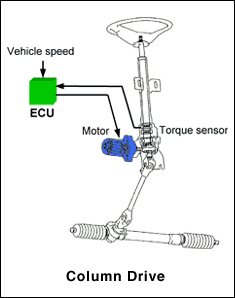
Electric power steering works with the help of an Electric Motor and a control unit which has some sensors. The motor runs on battery and will use electric power to assist the movement of steering when the driver turns the wheel.
Hydraulic Power Steering V/S Electric Power Steering
Hydraulic power steering is a primitive technology used for decades and has improved a lot with time. Earlier, it did not have any difference in steering response with speed of the car, but the new age of hydraulic power steering are speed sensitive and work better than the older hydraulic power steering.
Electric power steering are comparatively new technology with less complicated build and mechanism, takes less space and are more durable. Electric power steering use sensors to sense the car speed and will take care of the different steering response required for different speeds.
Some of the main differences are as below:
1. Hydraulic Power Steering System is complicated compared with Electric Power Steering
2. Hydraulic Power Steering System usually weighs more than Electric Power Steering
3. Hydraulic Power Steering uses hydraulic fluids for operation whereas there is no such fluid needed for Electric Power Steering, thus Electric Power Steering needs less maintenance compared to hydraulic power steering.
4. Electric Power Steering gives better response at different speeds as compared to Hydraulic Power Steering
5. Eclectic Power Steering is less prone to problems and faults and are more durable as compared to Hydraulic power steering.
6. Hydraulic power steering extracts power from engine, so it reduces the fuel mileage of the engine. Electric power steering consumes power from battery which is also charged by engine, but it consumes less power compared to Hydraulic power steering. So a car having Electric power steering will give more mileage than one with Hydraulic power steering.
Conclusion :
Electric Power Steering is better than Hydraulic Power steering. Hope this helps you decide when you look into the features of the car you are going to buy. For instance, comparing Hyundai Santro and Hyundai i10 , Hyundai Santro has Hydraulic Power Steering whereas Hyundai i10 has electric power steering.
Updated 21 July 2010
Nissan has just revealed a more efficient innovative mix of the above two technologies – Electro Hydraulic Power Steering System By Nissan