

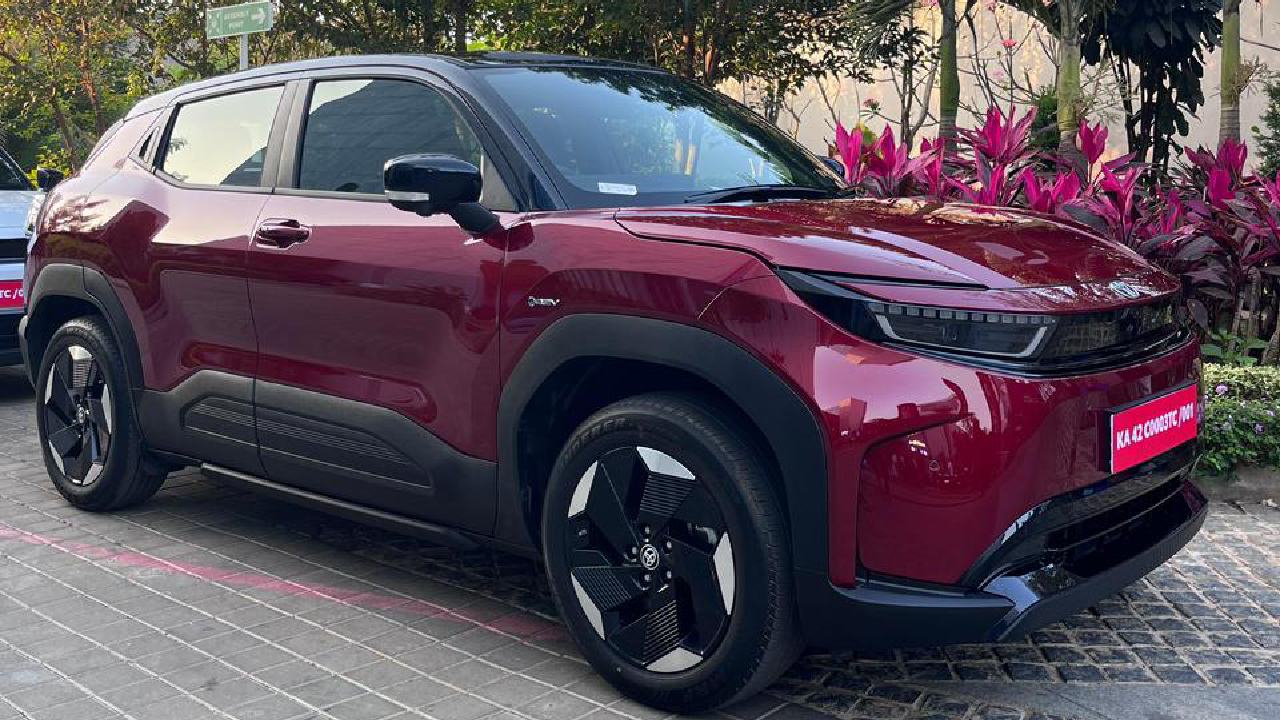
The Ebella is the Toyota counterpart to the Maruti Suzuki e Vitara as part of the joint venture between the two Japanese carmakers
I recently got the opportunity to experience the new Toyota Urban Cruiser Ebella in the flesh. As a consequence, I am here to express my opinions about the electric SUV. Note that while Toyota originally sells strong hybrid mills in India, the Ebella will be its first EV in our market, courtesy of Maruti Suzuki. In my review, I shall discuss aspects like design language, interior packaging, driving dynamics and tech amenities. So, without any further ado, let us delve into it.
First Impressions: A Familiar Yet Distinct Design
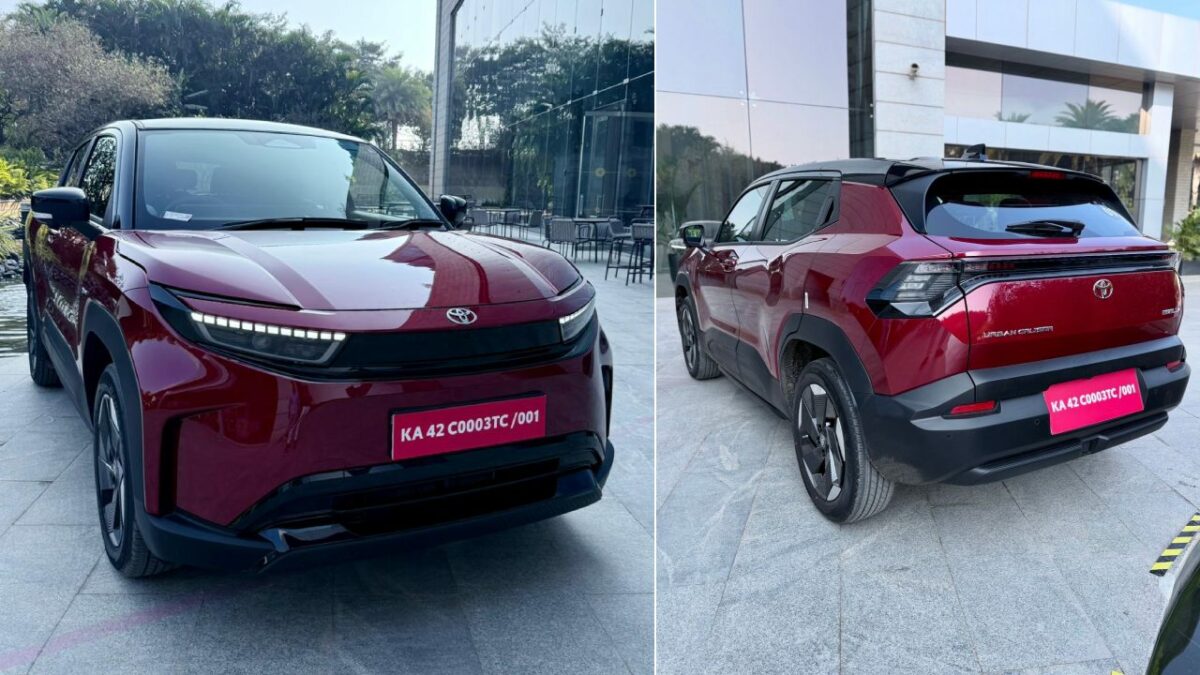
At first glance, the Urban Cruiser Ebella subtly communicates its identity. It shares underpinnings with the Maruti Suzuki eVitara (which many of you will know by now), but Toyota has given it a distinct face and presence. At the front, the triangular headlamp design with segmented DRLs and extensive gloss-black trim lends it a sharper, more premium appeal compared to most EVs in this bracket. The slim vertical air intakes and minimal silver skid plate add a degree of ruggedness without going overboard. It’s more refined than radical, a design cue that aligns with Toyota’s philosophy of longevity over fleeting trends.
Moving down the sides showcases the 18-inch aero-optimized alloy wheels fill the arches nicely, and while the overall silhouette doesn’t scream sportiness, it carries a balanced poise that works well for both city and highway driving. Clearly, the Ebella doesn’t chase headlines with bold lines or complex surfaces. Instead, it settles into a confident and composed territory that feels mature for this segment.
Cabin: Comfort, Tech and Practicality
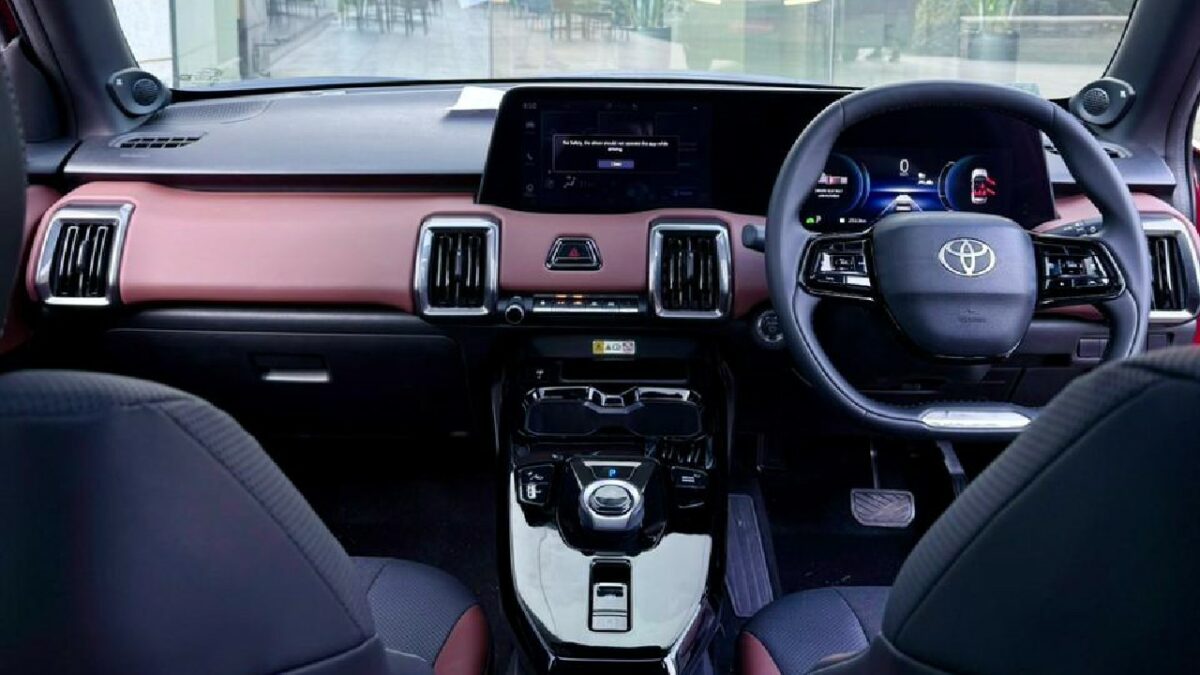
Toyota hasn’t skimped when it comes to the interior. The cabin, though familiar to anyone who’s seen the eVitara, feels well-put-together with quality materials and a thoughtful layout.
Infotainment and Displays: The 10.25-inch touchscreen sits prominently, paired with a 10.1-inch digital instrument cluster. Wireless Android Auto and Apple CarPlay come standard, which industry competitors often reserve for higher trims. For the Indian context, this combination hits the sweet spot between usability and modern expectations.
Features That Matter: Ventilated front seats, automatic climate control, ambient lighting, a JBL sound system, and a 360° camera add to the sense that Toyota hasn’t compromised on comfort or convenience. What’s more, Level 2 ADAS features, including adaptive cruise control and lane assist, are significant in a mainstream EV at this price point.
Space and Practicality: The cabin offers generous headroom and a flat floor thanks to the EV architecture. Rear passengers benefit from sliding and reclining seats that enhance daily usability, a detail that matters when you’re living with the car beyond short test rides.
Powertrain and Performance: Smooth, Civilized and Usable
Under the skin, the Ebella gets familiar electric fundamentals, but with Toyota’s calibration twist. It’s offered with two LFP battery options: a 49 kWh pack and a larger 61 kWh pack, both driving the front wheels. The 49 kWh version delivers around 144 PS, while the 61 kWh variant bumps this up to 174 PS, with torque fixed at roughly 189 Nm across the range. This power output doesn’t make the Ebella a drag racer, and Toyota isn’t pretending it is one. What it does offer is usable, predictable performance in daily scenarios. City traffic, suburban cruising, and moderate highway bursts are handled with confidence. There’s no dramatic surge like you’d find in some high-output EVs, but that’s the point – this is an EV built for broad usability over headline lap times.
The ARAI-claimed figures of 440 km for the smaller battery and up to 543 km for the larger pack place the Ebella squarely competitive with EV rivals in this bracket, especially considering real-world use patterns where you’re unlikely to exhaust the charge in one go. There are driving modes on offer too, including Normal, Eco and Sport, which are all present (with subtle changes to throttle response and regenerative braking feel), and they’re calibrated to suit typical Indian driving conditions rather than chasing efficiency figures alone.
| Specs | Toyota Urban Cruiser Ebella |
| Battery | 49 kWh and 61 kWh |
| Power | 142 hp – 181 hp |
| Torque | 189 Nm – 300 Nm |
| Range (ARAI) | 543 km |
| Drivetrain | 2WD and 4WD |
Ride Quality and Handling: Composed Rather Than Extreme
What struck me most was how composed the Urban Cruiser Ebella feels over undulating roads and urban surfaces alike. Toyota’s suspension tuning leans toward comfort, absorbing imperfections with relative composure without feeling disconnected. There’s a solidity in the steering feedback and body control that’s missing in some competitors that chase softness. Even at moderately high speeds, the SUV feels planted, and the kerb weight isn’t felt as a liability. It’s not a driver’s car in the classic sense – it’s far from a hot hatch dynamic, but it doesn’t need to be. It’s predictable, confidence-inspiring, and well-suited to India’s mix of urban and highway conditions. Interestingly, the NVH levels are better than the e Vitara courtesy of the distinct styling.
Safety and ADAS Suite: More Than Expected
Safety tech is undeniably one of the highlights here. Toyota has equipped the Ebella with a generous suite of Level 2 ADAS features, including adaptive cruise control, lane keeping assist, autonomous braking and more. In a segment where active safety features are often optional or half-baked, it’s telling that Toyota has prioritized these systems across trims. That’s a reflection of the brand’s broader global direction, safety as standard rather than a checkbox. Crash-test ratings aren’t official yet, but the presence of seven airbags, stability control, and comprehensive driver assist tech puts the Ebella in a strong position.
Competition: Where Ebella Fits In the EV Landscape
This is perhaps the most interesting part of the story. The Urban Cruiser Ebella doesn’t exist in a vacuum – it enters a fiercely competitive midsize EV segment that includes the Tata Curvv EV, Hyundai Creta Electric, Mahindra BE 6, MG ZS EV, VinFast VF6, and yes, the eVitara itself. What Toyota has done here is clever. Instead of trying to reinvent the wheel, it’s taken a proven EV platform and reinterpreted it with Toyota’s strengths, solid build quality, user-friendly tech, a practical feature set, and mainstream pricing aspirations. The result is not the flashiest EV, but very much a practical, well-rounded EV that will appeal to a broad swathe of buyers, especially those who may be stepping up from ICE SUVs or conventional hybrids for the first time.
Final Verdict: A Balanced EV Entry, Not a Gamble
If you ask me what the Urban Cruiser Ebella truly represents, it’s Toyota’s conservative yet measured entry into a segment that’s evolving faster than most legacy brands expected. It won’t be the range champion on paper, nor the outright performance star, but it doesn’t need to be. What it does deliver is a compelling mix of daily usability, safety, features, and brand confidence that will resonate with a large chunk of buyers looking to transition to EVs without compromising on practicality. Toyota has wisely played its cards here, not chasing headlines but chasing long-term relevance in India’s EV ecosystem.
Should You Consider It?
For urban families, daily commuters, highway travellers, and anyone who wants a balanced electric SUV that doesn’t demand constant compromises, yes, the Urban Cruiser Ebella deserves your attention. In an EV age where choices are multiplying by the month, Toyota’s offering feels like a sensible foundation, not a flashy experiment, but a strategic step toward electrifying India’s mainstream automotive market.
Editor’s Note
Harsh Kashyap, Author and Editor
As someone who has tracked Toyota’s strategy in India for over 15 years, I see the Urban Cruiser Ebella as a calculated and timely move rather than a rushed EV entry. The brand understands that Indian buyers prioritise reliability, resale value and real-world usability over outright specs, and this product reflects exactly that mindset. In a segment heating up with aggressive newcomers, Toyota has chosen balance over bravado, and in the Indian market, that often proves to be the smarter long-term play.
Also Read: New Toyota Urban Cruiser Ebella vs Maruti e Vitara – What All’s Different?