

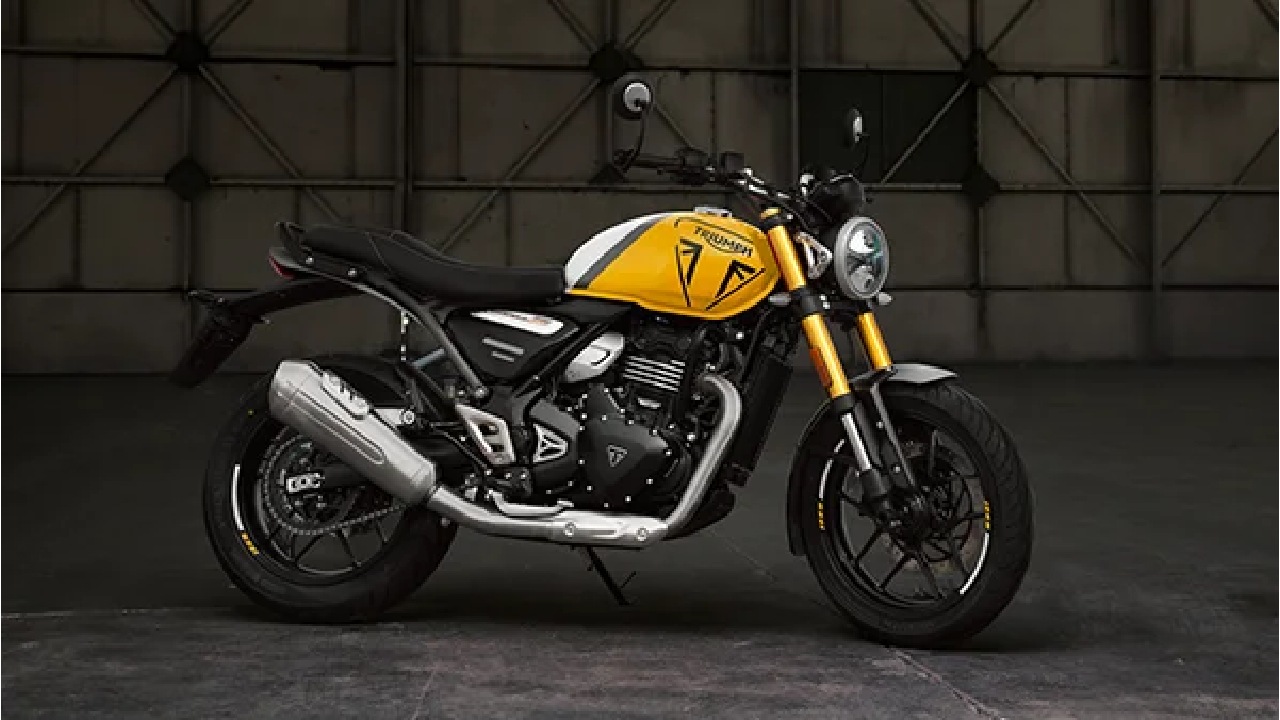
The downsizing is done strategically to take advantage of the GST regulations prevalent in the Indian automobile market
In this post, we take a look at the reason why the Triumph 400 motorcycles will now carry 350cc engines. Triumph, as we know, has a partnership with Bajaj Auto in India. As a result, the former has been expanding its portfolio to cater to a wide range of customers in our market. At present, Triumph sells models like the Speed 400, Scrambler 400 X, Speed T4, Speed Twin 900/1200, Street Triple 765 and Rocket 3 Storm. From these, the 400 series of bikes is getting a major update.
Triumph 400 Bikes Now Feature 350cc Engine
The main reason for downsizing the motorbikes is the GST slabs in India. As per the existing laws, the tax on bikes with engine capacity over 350cc is approximately 40%, while that on engines lower than 350cc is 18%. Hence, this is a considerable price difference in the final prices of the models. In absolute terms, the final price gap could easily be around Rs 21,000 just because of downsizing. That is why two-wheeler manufacturers are taking advantage of these tax rules to make the products more attractive to buyers. The table below neatly captures the price reduction due to the smaller engine.
| Triumph Bikes | Old Price | New Price | Difference |
| Speed T4 | Rs 1,95,000 | Rs 1,95,000 | — |
| Speed 400 | Rs 2,39,000 | Rs 2,31,890 | Rs 7,110 |
| Scrambler 400 X | Rs 2,69,977 | Rs 2,59,241 | Rs 10,736 |
| Scrambler 400 XC | Rs 2,96,917 | Rs 2,89,534 | Rs 7,383 |
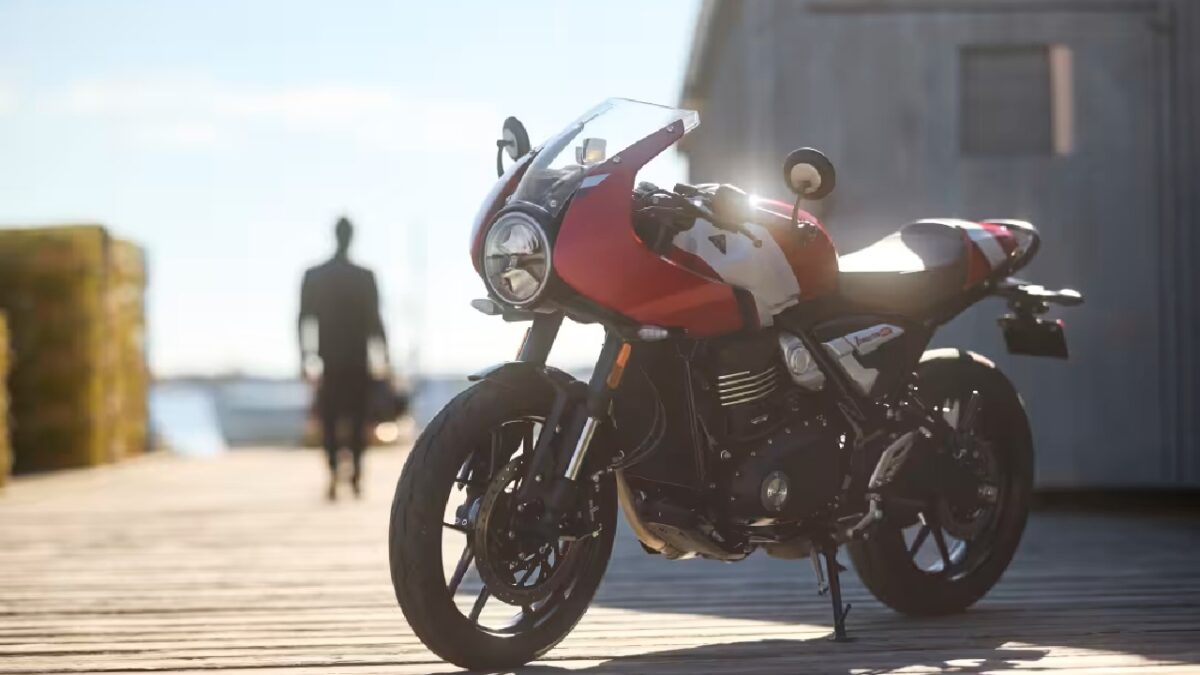
| Thruxton 400 | Rs 2,76,383 | Rs 2,65,538 | Rs 10,845 |
The new Triumph Speed T4 gets the 349cc engine, which generates a healthy 29 PS and 31 Nm of peak power and torque, respectively. This mill pairs with a 6-speed transmission. This same engine produces an even higher 37 PS and 32 Nm of maximum power and torque, respectively, in the case of Speed 400. In the Thruxton 400, this mill is good for 40 PS and 32 Nm. Clearly, the bikes remain competitive in terms of performance, while the price reduction will make them incredibly enticing.
Editor’s Note
Yatharth Chauhan, Managing Editor
From my experience of tracking pricing strategies in India, this move by Triumph and Bajaj is a textbook example of how manufacturers are adapting products to suit local tax structures. The sub-350cc segment is extremely price-sensitive, and even a marginal reduction can significantly influence buying decisions in this space. What stands out is that Triumph has managed to retain competitive performance figures despite the downsizing, which is crucial for maintaining its premium positioning. In the Indian context, this strategy could substantially widen the brand’s reach without diluting its core appeal.
Also Read: New Triumph Scrambler 400 XC Launched in India