

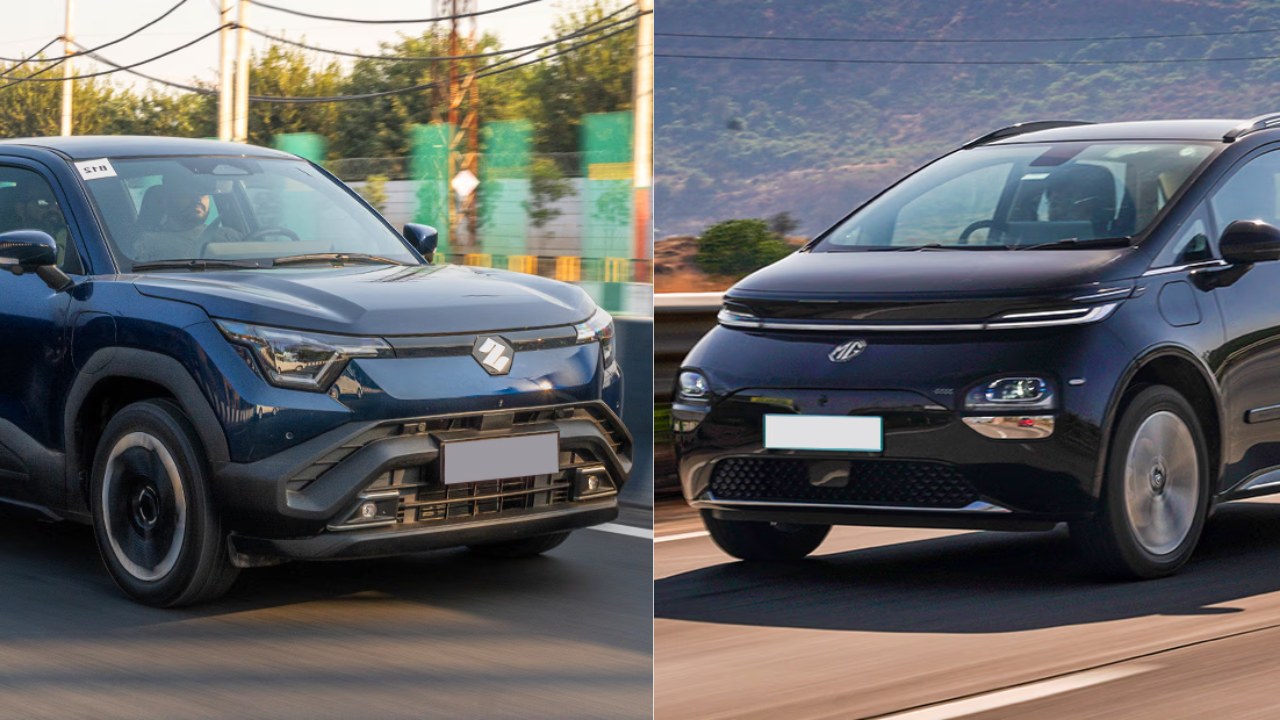
The prices of the first electric vehicle from Maruti Suzuki are finally out and the BaaS is the main talking point
In this post, I am comparing the Maruti e Vitara and the MG Windsor on the basis of price, specs, features, design, etc. E Vitara marks a special chapter in the history of the Japanese car marque, by virtue of being the first EV in its portfolio ever. Aimed to attract buyers looking for a mid-size electric SUV, the e Vitara emerges in the competitive EV space in India. On the other hand, the MG Windsor is among the highest-selling EVs in the country. It has done an impressive job on the sales charts in the last few months. For now, let us compare the two thoroughly.
Maruti e Vitara vs MG Windsor – Price Comparison
The new Maruti e Vitara is being offered with a BaaS (Battery-as-a-Service) model that substantially reduces the upfront purchase cost. Under this scheme, the starting price stands at Rs 10.99 lakh, plus a battery subscription charge of Rs 3.99 per km. Maruti is also providing a 60% assured buyback after three years and an 8-year battery warranty for added peace of mind. Buyers will further benefit from a complimentary home charger with installation valued at Rs 50,000, along with free charging for the first year. Without the BaaS, the prices start at Rs 15.99 lakh and go up to Rs 19.79 lakh, ex-showroom.
In comparison, even the MG Windsor EV is available with the BaaS model, which makes it easy and affordable for buyers. The EV is priced from Rs 9.99 lakh, ex-showroom without the battery, while the version with an outright battery purchase costs Rs 14 lakh, ex-showroom. Opting for the battery subscription plan requires users to pay Rs 3.5 per km as a monthly rental. However, there is a minimum billing clause, which means customers must pay for at least 1,500 km of usage every month, irrespective of the actual distance driven. Hence, buyers can choose according to their individual preferences.
| Price (ex-sh.) | Maruti e Vitara | MG Windsor |
| Base Model | Rs 10.99 lakh + Rs 3.99 per km (Baas); Rs 15.99 lakh (w/o BaaS) | Rs 9.99 lakh + Rs 3.9 per km (BaaS); Rs 14 lakh (w/o BaaS) |
| Top Model | Rs 19.79 lakh (w/o BaaS) | Rs 13.39 lakh + Rs 4.5 per km (BaaS); Rs 18.50 lakh (w/o BaaS) |
Maruti e Vitara vs MG Windsor – Specs Comparison
Starting with the Maruti e Vitara, the electric SUV is underpinned by the brand’s new HEARTECT-e platform and comes with two battery options – 49 kWh and 61 kWh. It is currently offered in a single-motor, front-wheel-drive configuration, while global markets also get a dual-motor AWD version. The power and torque outputs range between 142 hp / 193 Nm and 181 hp / 193 Nm, depending on the battery pack. Maruti claims a driving range of up to 543 km on a full charge with the larger battery, whereas the smaller unit delivers a claimed 440 km. Additionally, with 180 mm of ground clearance, it should manage typical Indian road conditions and tall speed breakers with relative ease.
In addition, the MG Windsor is available with two battery pack options – 38 kWh and 52.9 kWh, both featuring a prismatic cell structure. These battery packs feed a front-mounted electric motor that drives the front wheels. The motor produces 136 PS and 200 Nm of torque. Crucially, the claimed driving range stands at 332 km for the smaller battery and 449 km for the larger unit on a single charge. When connected to a 60 kW DC fast charger, the battery can be replenished from 20% to 80% in approximately 50 minutes.
| Specs | Maruti e Vitara | MG Windsor EV |
| Battery | 49 kWh & 61 kWh | 38 kWh & 52.9 kWh |
| Range | 440 km & 543 km | 332 km & 449 km |
| Power | 142 hp – 181 hp | 136 PS |
| Torque | 193 Nm | 200 Nm |
| DC Fast Charging | 10-80% in 45 mins | 50 mins (20%-80% w/ 60 kW) |
| Ground Clearance | 180 mm | 200 mm |
Maruti e Vitara vs MG Windsor – Features, Tech and Safety Comparison
Modern buyers demand cutting-edge technology and maximum convenience features in their vehicles. Consequently, manufacturers are loading their products with a wide array of premium equipment. Some of the key in-cabin highlights of the e Vitara include:
- 10.2-inch Digital Instrument Cluster
- 10.1-inch Touchscreen Infotainment Display
- Physical Controls for HVAC and Multimedia
- Electric Sunroof
- Rear USB Ports
- Retractable Rear Seats
- Stylish AC Vents
- Soft-touch Materials
- Multi-colour Ambient Lighting
- Infinity Premium Sound System
- Ventilated Front Seats
- 10-way Powered Seats
- Sliding and Reclining Rear Seats
- 12-colour Ambient Lighting
- Drive Modes – Eco, Normal, Sport
- All-disc Brakes with Twin Piston Callipers in Front
- 306-litre Boot Space (w/ rear row pushed forward)
- 60+ Advanced Telematic Features
- Two-spoke Steering Wheel
- Leatherette Bucket Seats
- Rotary Shift Knob
- 750 kg Towing Capacity
- 2-spoke Steering Wheel with Controls
- Level 2 ADAS
- 5-star Bharat NCAP Safety Rating
- 7 Airbags
- ABS, ESP, EBD
- High Tensile Steel
- Hill Hold Control
- Multi-Collision Braking
- 360-degree Surround View Camera
- Front and Rear Parking Sensors
- Day and Night Adjustable IRVM
On the other hand, even the MG Windsor EV is among the most feature-packed vehicles in this class:
- 256-Colour LED Ambient Lighting
- 9-Speaker Audio System Powered by Infinity
- PM2.5 Air Filter
- Soft-Touch Materials
- 135° Reclining Rear Seats (Aero Lounge Seats)
- Front Seats Ventilation
- Infinity View Glass Roof
- 15.6-inch Touchscreen Infotainment Display
- Rear AC Vents
- Powered Seats
- Rear Armrest with Cup Holders
- Digital Bluetooth Key with Key Sharing
- MG iSmart Connected Car Tech with 80+ Features and 100 AI-based Voice Controls
- OTT Platforms
- Advanced Voice Commands in 6 Languages
- Home-2-Car Connectivity
- Wireless Charging
- 8.8-inch Digital Instrument Cluster
- 604-litre Boot Space
- 6 Airbags
- 35+ Safety Features
- V2L (Vehicle-to-Load)
- V2V (Vehicle-to-Vehicle)
- Level 2 ADAS
- Traffic Jam Assist
- Adaptive Cruise Control
- Forward Collision Warning
Design Comparison
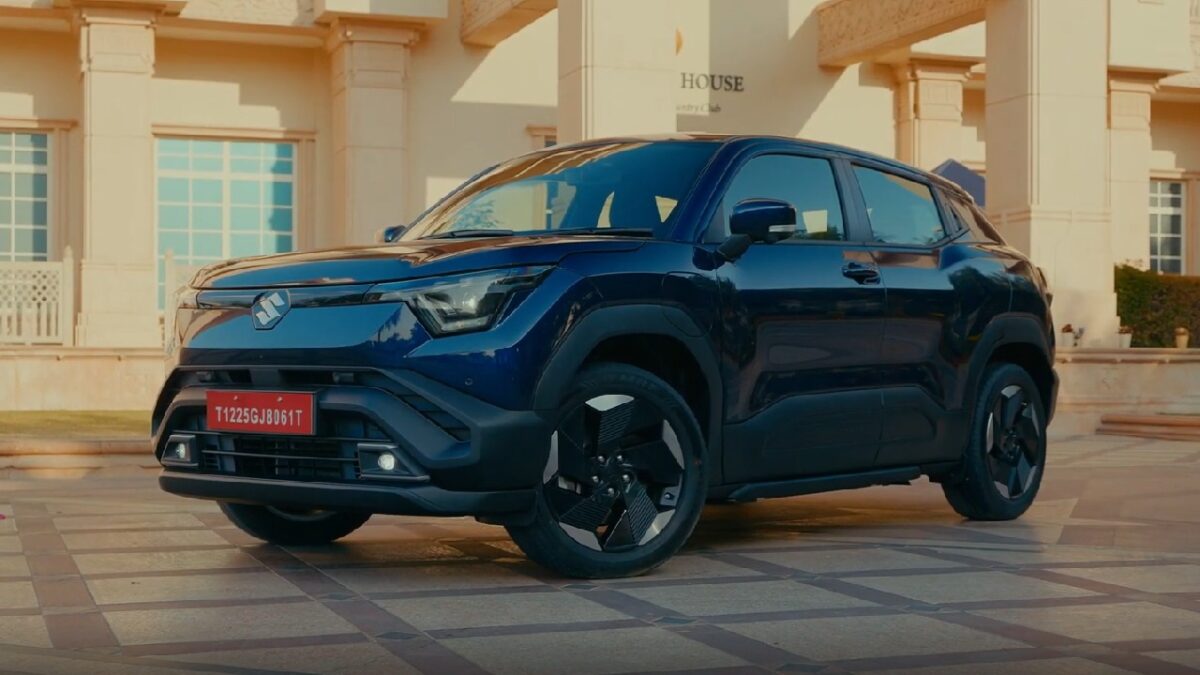
The Maruti Suzuki e Vitara sports a modern design while maintaining a somewhat recognisable styling theme. At the front, it gets striking LED lighting with LED DRLs, a sporty bumper housing fog lamps, a blanked-off grille section, and a neatly sculpted bonnet. The side profile is characterised by dual-tone aero alloy wheels, pronounced body contours, rugged cladding around the wheel arches, and blacked-out pillars, all of which give the EV a strong and assertive road presence. At the rear, it features LED taillamps connected by a black trim strip, a roof-mounted spoiler, a shark-fin antenna, and a sturdy bumper. Overall, the SUV looks bold and well-proportioned.
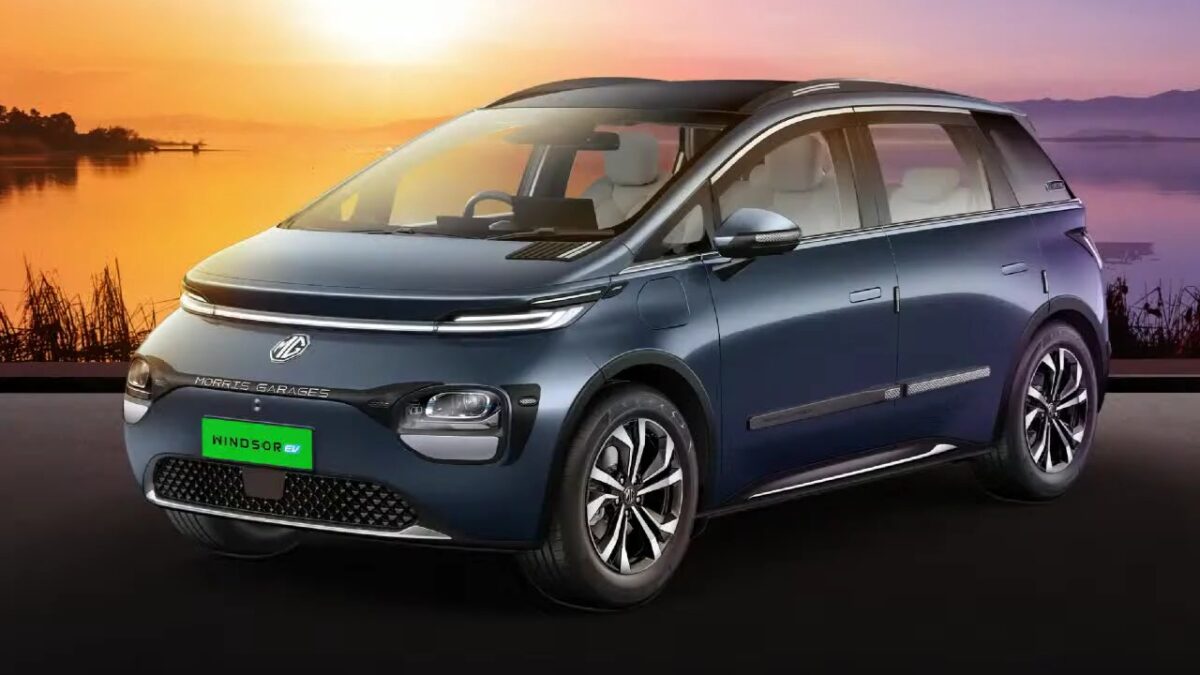
In contrast, the MG Windsor EV adopts a crossover-like silhouette rather than a conventional SUV stance. However, this works in its favour, giving it a distinctive and unconventional identity. At the front, it features a full-width LED light bar across the bonnet line that flows into LED DRLs on both ends. The main headlamp units are positioned lower down on the bumper at the outer edges, while a skid plate element adds a mild sense of ruggedness. Along the sides, it rides on 18-inch aero alloy wheels and gets blacked-out pillars, with the charging port located on the front left fender. At the rear, connected LED taillamps and a pronounced skid plate section round off its road presence.
Editor’s Note
Yatharth Chauhan, Managing Editor
From my perspective, the e Vitara is a watershed moment for Maruti Suzuki, but its success will hinge on how well Indian buyers accept the BaaS model in the mass market. The Windsor, meanwhile, continues to play to its strengths with a feature-heavy cabin and strong real-world value proposition. In a price-sensitive yet tech-hungry market like ours, ownership economics will matter more than outright specs. Ultimately, this is less a product battle and more a test of two different EV ownership philosophies in India.
Also Read: Maruti e Vitara vs Tata Nexon EV – Which EV To Buy?