

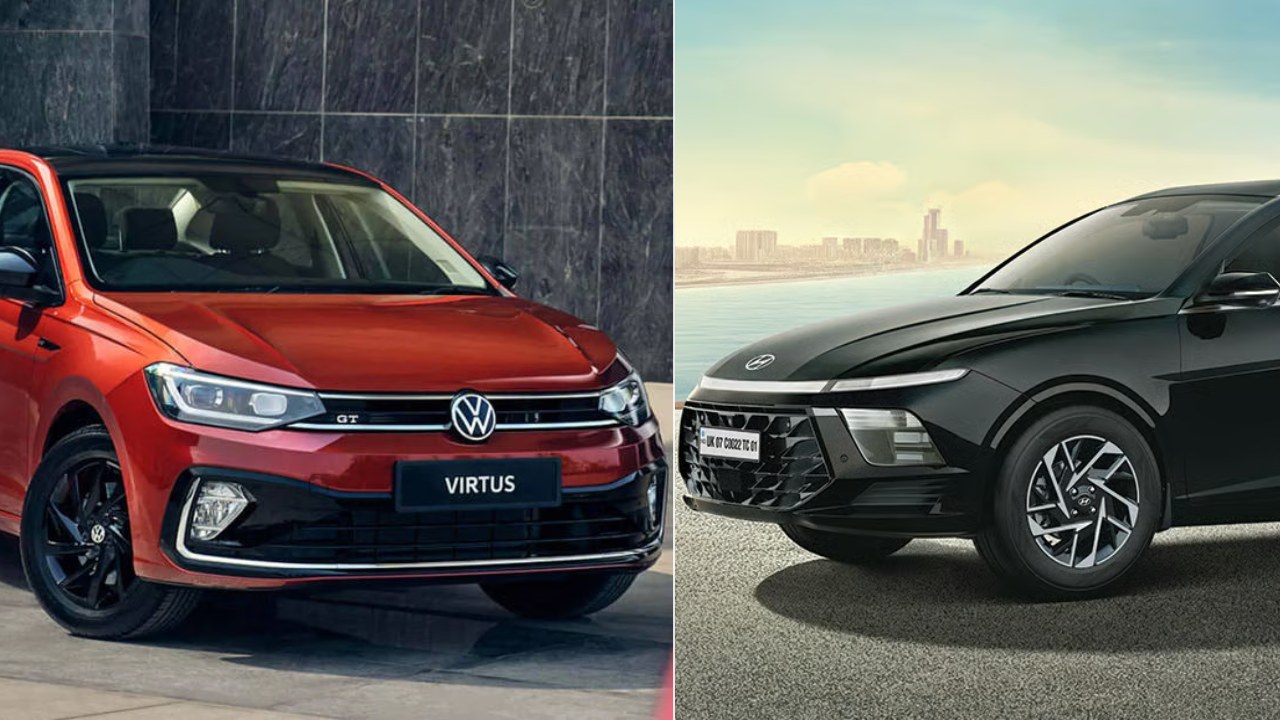
The new Verna has been updated with a few design tweaks and some new in-cabin features
In this post, we compare the 2026 Hyundai Verna and the VW Virtus on the basis of specs, features, price, etc. Verna has been one of the most successful monikers in this segment. It has been around since 2006. In the last two decades, the Korean auto giant has updated it regularly to ensure that it stands against the stiff competition. The latest 2026 iteration of the famed sedan was launched yesterday. On the other hand, the Virtus is a key product for the German carmaker. It is generally preferred by enthusiastic drivers who love to get behind the wheel. For now, let us take a look at the details of this comparison.
2026 Hyundai Verna vs VW Virtus – Price Comparison
The latest iteration of the Hyundai Verna starts at Rs 10.99 lakh and goes up to Rs 18.26 lakh, ex-showroom. These are valid as per the new trim names of the Verna, ranging from HX2 to HX10. On the other hand, the price bracket for the Virtus is between Rs 10.50 lakh and Rs 19 lakh, ex-showroom. The base trim of the Virtus has a slight advantage, while the top version of the Verna is a bit cheaper.
| Price (ex-sh.) | 2026 Hyundai Verna | VW Virtus |
| Base Model | Rs 10.99 lakh | Rs 10.50 lakh |
| Top Model | Rs 18.26 lakh | Rs 19 lakh |
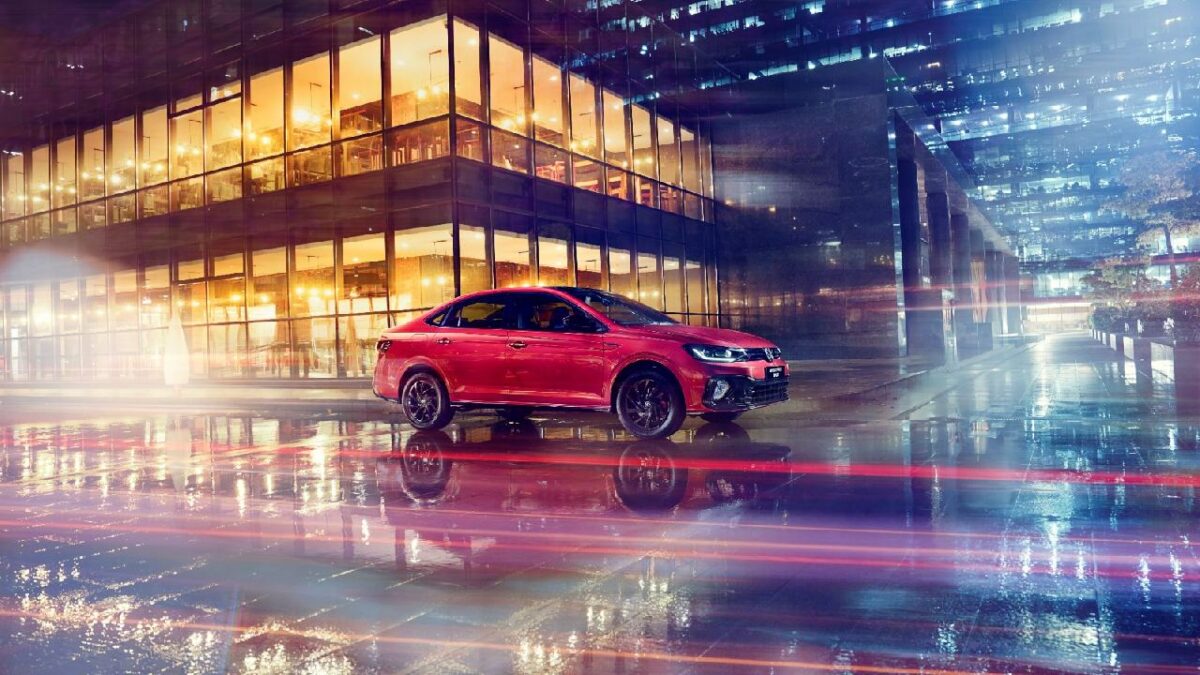
2026 Hyundai Verna vs VW Virtus – Features, Tech and Safety Comparison
This is one aspect which is arguably the most crucial in modern cars as per the customer demands. People want their vehicles to come with all the latest tech and convenience amenities. To address that, carmakers equip their models with all the bells and whistles. For now, let us take a look at the details of what the new Verna offers:
- Dual 10.25-inch + 10.25-inch integrated infotainment and digital cluster
- Leatherette seat upholstery
- Hyundai Bluelink with 70+ connected features
- Paddle shifters
- Drive Modes
- Idle Start-Stop
- D-cut Steering Wheel
- 350 voice commands and multi-language UI support
- Driver seat electric 8-Way adjust
- 1st in segment Driver memory seat with welcome retract function
- Passenger seat electric 4-Way adjust
- 1st in segment Passenger seat electric walk-in device
- 1st in segment Rear Window Sunshade
- 1st in segment Smart Trunk with largest Boot space of 528 litres in the segment
- Find My Car through SVM
- Electric sunroof
- 1st in segment Surround view Monitor (New)
- Blind Spot view monitor (New)
- Smartphone Wireless charger
- Front Ventilated seats
- Smart Key with Push Button Start
- Wireless Android Auto & Apple CarPlay1
- 1st in segment Bose premium sound 8 speaker system
- Innovative 1st in segment switchable‑type infotainment and auto climate controller
- Hyundai SmartSense Level 2 ADAS with 20 features
- 1st in segment 7 Airbags (Driver, Passenger, Side, Curtain and Centre Side)
- 1st in segment Dashcam
- Hill Start Assist Control
- Electronic Stability Control with VSM
- ISOFIX child seat mounts
- Tyre Pressure Monitoring System Highline
- All 4 disc brakes
- Electronic Parking Brake
- Auto Hold
Similarly, the VW Virtus is equipped with the latest amenities. Some of the major attractions include:
- 10.1-inch Touchscreen infotainment
- 8-inch digital cockpit
- 8-speaker audio system
- Wireless charging
- Wireless Android Auto and Apple CarPlay
- MyVolkswagen Connect
- Electric Front Seats (Driver + Co-driver) – 1st in segment
- Adjustable dual rear AC Vents
- Cooled glove box
- Height adjustable head restraints
- Electrically adjustable door mirrors
- Electrically folding door mirrors
- Auto dimming IRVM
- Smart touch climatronic AC
- KESSY – Push button start stop
- Electric sunroof
- Ventilated front seats with leather inserts
- 4 USB-C ports
- Ambient light pack
- Footwell Illumination
- Leatherette seat upholstery
- Headliner in Atacama Beige
- Chrome accent on air vents slider
- 6 Airbags
- Tire Pressure Deflation Warning
- ISOFIX child seat anchorage (rear 2x)
- Brake disc wiping
- ABS with EBD and ESC
2026 Hyundai Verna vs VW Virtus – Specs Comparison
The 2026 Hyundai Verna continues to draw power from a 1.5-litre 4-cylinder naturally aspirated petrol engine and a 1.5-litre turbo engine. These generate a decent 115 PS / 144 Nm and 160 PS / 253 Nm of maximum power and torque, respectively. Note that the latter is the most powerful mill in the segment, while the former is a tried-and-tested engine from Hyundai. Both of these engines are also available on the Creta. Performing transmission duties are 6-speed manual, a CVT automatic and a 7-speed DCT automatic gearboxes. Hence, the buyers get all sorts of options to choose from, depending on their personal requirements.
On the other hand, the VW Virtus is available with two turbo petrol mills – a 1.0-litre TSI turbo petrol engine and a 1.5-litre EVO turbo petrol engine. These are capable of producing a healthy 115 PS / 178 Nm and 150 PS / 250 Nm of peak power and torque, respectively. The smaller engine can be paired with either a 6-speed manual or a 6-speed torque converter automatic, while the larger engine comes with a sole 7-speed DCT option. Again, there are enough options for buyers to choose from.
| Specs | 2026 Hyundai Verna | VW Virtus |
| Engine | 1.5L NA P / 1.5L Turbo P | 1.0L Turbo P / 1.5L Turbo P |
| Power | 115 PS / 160 PS | 115 PS / 150 PS |
| Torque | 144 Nm / 253 Nm | 178 Nm / 250 Nm |
| Transmission | 6MT / CVT / 7DCT | 6MT / 6AT / 7DCT |
Editor’s Note
Yatharth Chauhan, Managing Editor
Having tracked the mid-size sedan segment in India for over a decade, I’ve seen it evolve from a purely performance-driven space to one where features and technology play an equally critical role. The 2026 Hyundai Verna clearly doubles down on tech, safety and cabin experience, while the VW Virtus continues to appeal to purists who value driving dynamics and solid engineering. In my view, the final choice still boils down to buyer priorities, feature-rich comfort versus engaging driving performance, a trend that has long defined this segment in the Indian market.
Also Read: Updated Hyundai Verna Launched – What’s Different?