

The prices after the BaaS (Battery-as-a-service) model are extremely attractive regardless of which EV segment we are talking about
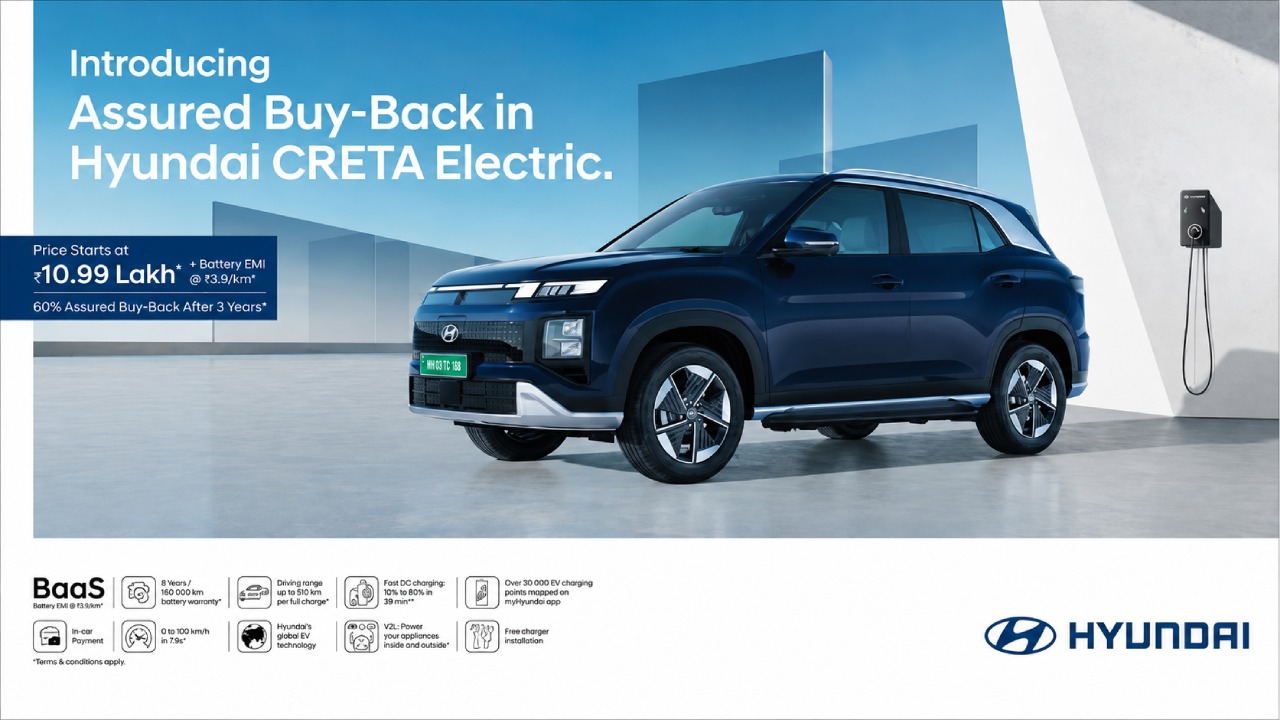
Updated on 04.08.2026 – In rather exciting news for potential Hyundai Creta Electric owners, the Korean auto giant has announced an Assured Buyback Program for the mid-size electric SUV. According to this, the company is offering 60% Assured Buyback Value till 3 years / up to 45,000 km for the Creta EV. As a consequence, the buyers can purchase the EV more confidently since the resale hassle will no longer be an issue. Add to this the BaaS route to buy an EV, and the customers can certainly take the plunge with tons of benefits.
While these initiatives can give immense peace of mind while buying and selling the EV, the continuously expanding charging infrastructure from Hyundai is yet another key aspect to enhance the EV ownership experience. In fact, the myHyundai app enables EV users to discover over 30,000 charging points across the country. Talking specifically, HMIL has already installed 183 DC fast charging stations across 105 cities and wants to take this number to 600 by 2030. Therefore, the range anxiety of the consumers will go down.
Hyundai Creta Electric Now Available at Rs 10.99 Lakh, Maruti e-Vitara Effect?
Originally published on 03.07.2026 – Hyundai has announced the prices of the Hyundai Creta Electric with the BaaS model. Note that BaaS has reformed the EV industry in India in the last couple of years. The MG Windsor EV was the first car to come with this practice and MG extended it to its entire range. The other carmakers soon followed suit. As a result, Hyundai and Maruti Suzuki also offer this program to make the starting prices significantly more enticing to cater to a wider range of potential customers. For now, let us take a look at the details of the Creta Electric and e-Vitara.
Hyundai Creta Electric Price with BaaS
The Hyundai Creta Electric now starts at Rs 10.99 lakh, ex-showroom, with the BaaS model, along with the additional Rs 3.90 per km battery rental. Note that the prices of the entire variant range have not been announced yet. Nevertheless, the non-BaaS model range starts at a considerably higher Rs 18.03 lakh and goes up to Rs 24.70 lakh, ex-showroom. Hence, the price difference for the base model is a whopping Rs 7.04 lakh, ex-showroom. This shows the power of BaaS, which is why it is gaining massive popularity in India.
For comparison, even the Maruti e-Vitara bears the starting price tag of Rs 10.99 lakh, ex-showroom, with Rs 3.99 per km as battery rental under BaaS. However, without BaaS, the prices start at Rs 15.99 lakh, ex-showroom. In any case, the fact that the e-Vitara is a born electric, while the Creta Electric has been derived from its ICE counterpart, is the main reason for this price gap.
| Price (ex-sh.) | Hyundai Creta Electric (w/ BaaS) | Hyundai Creta Electric (w/o BaaS) | Maruti e-Vitara (w/ BaaS) | Maruti e-Vitara (w/o BaaS) |
| Base Model | Rs 10.99 lakh + Rs 3.90 per km | Rs 18.03 lakh | Rs 10.99 lakh + Rs 3.99 per km | Rs 15.99 lakh |
| Top Model | TBA | Rs 24.70 lakh | Rs 14.29 lakh + Rs 4.39 per km | Rs 20.01 lakh |
Hyundai Creta Electric vs Maruti e-Vitara – Specs Comparison
Starting with the Maruti e-Vitara, the electric SUV is based on the company’s dedicated HEARTECT-e architecture and is available with two battery pack choices – 49 kWh and 61 kWh. At present, it is offered with a single-motor front-wheel-drive setup, although international markets also have access to a dual-motor all-wheel-drive version. Depending on the battery selected, the powertrain produces either 142 hp and 193 Nm or 181 hp and 193 Nm. Maruti claims a maximum driving range of 543 km with the larger battery pack, while the smaller battery is rated for up to 440 km on a single charge. With a ground clearance of 180 mm, the e Vitara should also be well-suited to handling Indian roads, including rough patches and high speed breakers.
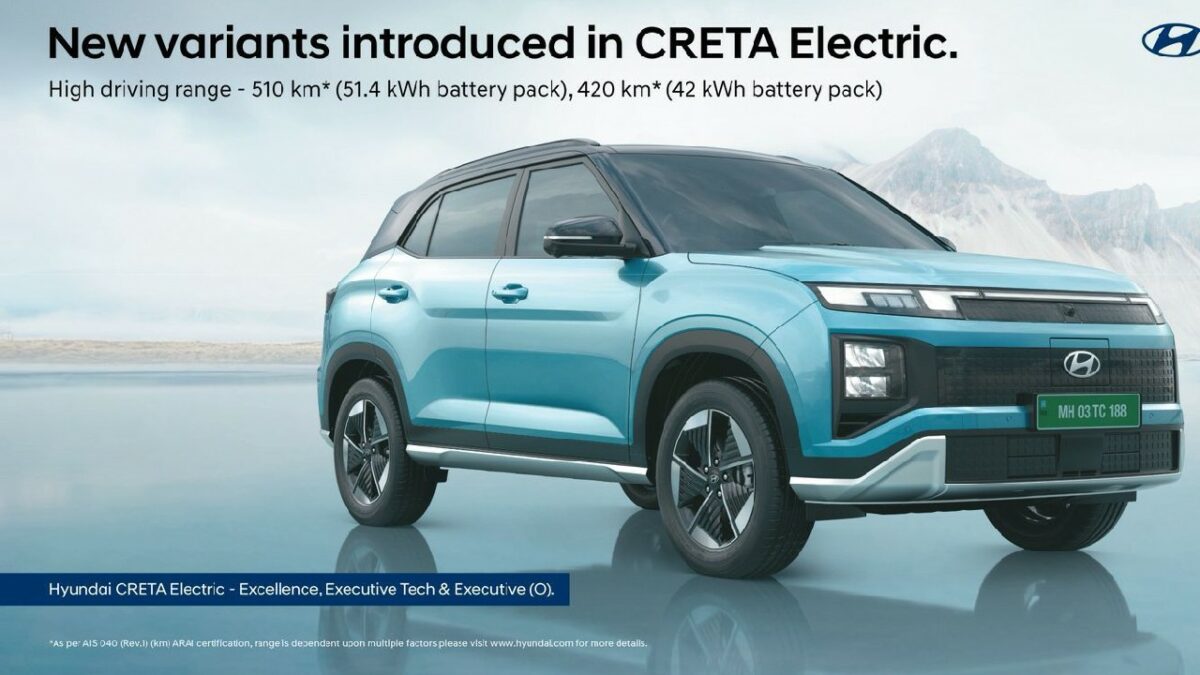
The Hyundai Creta Electric is available with two battery pack choices – 42 kWh and 51.4 kWh. According to ARAI figures, these offer a claimed range of 420 km and 510 km, respectively, on a single charge, although real-world range is expected to be slightly lower. The smaller battery variant develops 135 PS, while the larger battery version produces 171 PS and 255 Nm of peak torque. To enhance efficiency and performance in colder climates, Hyundai has equipped the SUV with a battery heating system, which also helps optimize charging speeds. Using a 100 kW DC fast charger, the battery can be replenished from 10% to 80% in just 39 minutes, while a full 10% to 100% charge takes around 4 hours with an 11 kW AC wall box charger. Even with a 50 kW DC fast charger, the 10% to 80% charging time is a respectable 58 minutes. Furthermore, Active Aero Flaps help improve aerodynamic efficiency, contributing to better range and overall energy management.
| Specs | Hyundai Creta Electric | Maruti e Vitara |
| Battery | 42 kWh & 51.4 kWh | 49 kWh & 61 kWh |
| Range | 420 km – 510 km | 440 km – 543 km |
| Power | 135 PS – 171 PS | 142 hp – 181 hp |
| Torque | 255 Nm | 193 Nm |
| DC Fast Charging | 39 minutes (10-80%) | 10-80% in 45 mins |
Which One To Choose?
Now, the Hyundai Creta Electric has been converted from the ICE model to an EV version. This means that the platform, chassis, and mechanical components are the same. However, the battery has been slapped onto the floor of the mid-size SUV and electric motors have been added, while the combustion engine has been eliminated. On the other hand, the Maruti e-Vitara has been built as an electric car from scratch on a dedicated platform.
In terms of overall practicality, the Creta Electric is certainly the better product since the ICE model is one of the most well-rounded vehicles in the segment. This includes things like the size, cabin, features and road presence. However, the e-Vitara is a born electric model, which translates to better handling, in turn, resulting in a sportier ride. Therefore, if you are someone who wants to enjoy the driving experience, the e-Vitara might suit your needs better, but if you want a more practical and all-round family vehicle, the Creta Electric could be the one for you. In any case, I would suggest you visit your nearest dealerships to experience both of these in the flesh before making the final decision.
Editor’s Note
Yatharth Chauhan, Managing Editor
The growing adoption of Battery-as-a-Service is changing the way Indian buyers look at electric vehicles. By bringing the starting price of the Creta Electric down to Rs 10.99 lakh, Hyundai has made its EV far more accessible, while also matching the entry price of the Maruti e-Vitara. This move could intensify competition in the mid-size electric SUV space, where affordability remains a key purchase driver. While the e-Vitara benefits from being a dedicated EV, the Creta Electric leverages the proven strengths of one of India’s most successful SUVs. Ultimately, buyers now have two compelling options, and that’s great news for the overall growth of the EV market.
Also Read: Knight Editions of Hyundai Creta King, Creta Electric, Alcazar, i20 Detailed