

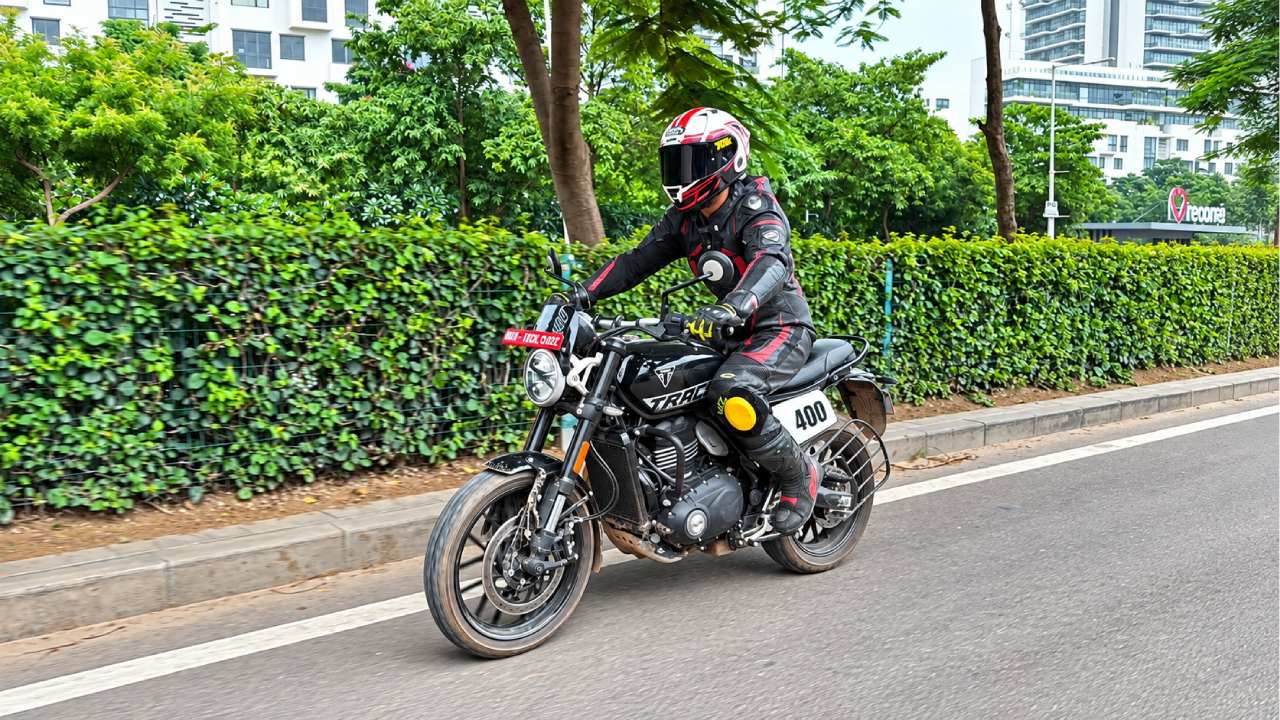
The motorcycle could be an ideal choice for those looking for a powerful machine with enthusiastic riding characteristics
What is a Tracker Motorcycle? A Tracker is a flat-track motorcycle that takes its inspiration from motorcycles, which are used in flat-track racing. These motorcycles are built to be agile, playful, and controllable on loose surfaces. They have a distinctive riding position featuring a wide handlebar. Flat seat and a compact, purposeful design. So is the Triumph Tracker really a flat-track racing motorcycle? We rode the motorcycle extensively to find out the answer.
Triumph Tracker 400: What is it?
Tracker 400 is the latest addition to Triumph’s made-in-India 400 CC motorcycle lineup, but with a 350 cc engine. It gets a 349 cc engine in the most powerful state of tune; it produces 40 PS at 8750 RPM and 32 Nm of torque at 7000 RPM . This makes it more powerful than the Speed 400 and Scrambler 400X, which produce only 37 PS. On paper, that immediately makes the Tracker interesting. But the numbers are only one part of the story. What really makes this motorcycle special is the way Triumph has combined this engine with a sporty chassis, tracker-inspired styling, and premium detailing.
Built Quality & Fit and Finish
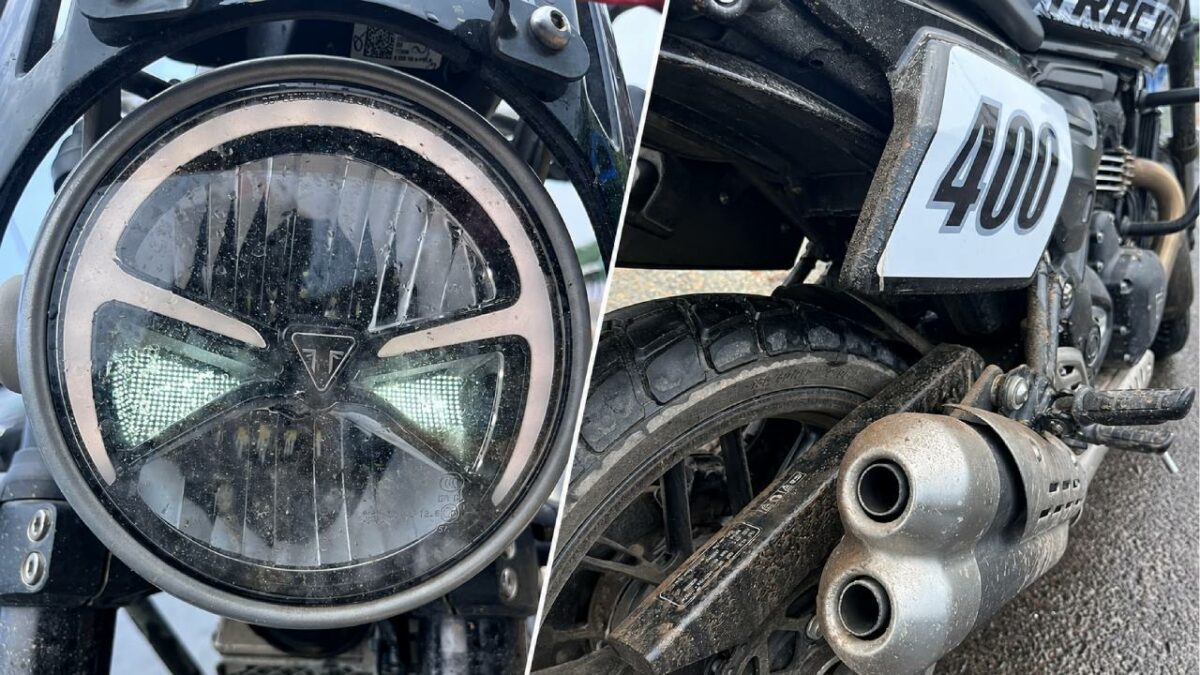
One of the strongest aspects of the Trackar 400 is the overall quality. The fit and finish are excellent, and this is something that becomes apparent as soon as you start looking at the motorcycle closely. The paint quality is excellent; the switchgear feels premium. There are no traces of cost-cutting. From the body panels to the finishing of smaller components, the trackar has the kind of attention to detail you expect from a premium motorcycle. In fact, I would consider the build quality and finish the strongest aspects of the entire 400 range.
Engine & Performance
Despite being smaller than the engine used in the global-spec Tracker 400, the India Spec motor produces a healthy 40 PS and 32 Nm. More importantly, it is extremely smooth. The power delivery is linear and predictable, with no sudden rush of power. However, the character of the engine changes as you move higher up the rev range. The strongest part of the performance comes towards the top, particularly beyond 6500 RPM. After that, the engine starts feeling energetic and continues to pull towards the redline. This makes the Tracker a motorcycle that rewards you for revving it. It doesn’t necessarily feel explosive at low rpm, but once you start pushing it, the engine becomes quite entertaining. Overall, the biggest advantage here is the smoothness of the engine.
Ride & Handling
The Tracker 400 is much sportier underneath than it appears, maybe. In fact, much of its chassis character comes from the Thruxton 400, which explains why this motorcycle feels more eager to turn into corners than you might expect from a Tracker-inspired motorcycle. The motorcycle feels nimble and responsive. The wide handlebar gives you plenty of leverage while changing directions. It’s particularly enjoyable on twisty roads, where the shorter wheelbase and sporty chassis make the Tracker feel playful. The suspension is on the firmer side, which doesn’t go well with the Tracker format of the motorcycle. I would have preferred a slightly more compliant setup to handle the sharp bumps and potholes on Indian roads.
The Wide Handlebar
The wide handlebar is an important part of the Tracker’s character. It gives you an excellent ledge and contributes to that distinctive flat track riding position. But there is a downside. In Indian city traffic, particularly when you are filtering between vehicles, the handlebar can feel unnecessarily wide. You have to be more conscious of the space you are riding through, especially in tight gaps. It isn’t a deal breaker, but it is something you will notice if you commute in city traffic a lot.
Ergonomics
The ergonomics are probably the most unusual part of the Tracker 400. The footpegs are placed higher and further back than on the Speed 400, which gives the motorcycle a much sportier riding position. The result is that you sit more engaged, riding the motorcycle with your lower body. At the same time, the wide handlebar gives you a commanding position and plenty of control. It works well when you are riding enthusiastically but can feel slightly awkward in slow-moving traffic. For a rider coming from a conventional roadster or commuter, it will take some time to get used to it.
What about the fuel tank?
There is one part of the design that I wasn’t completely convinced by – the fuel tank. The tank has fairly sharp edges, and it isn’t the easiest tank to grip with your knees. For someone who likes to use the tank extensively for body position. It’s not a major problem, but given the sporty riding position of the motorcycle. I would have preferred a tank that was easy to grip.
Is the Tracker 400 an off-road motorcycle?
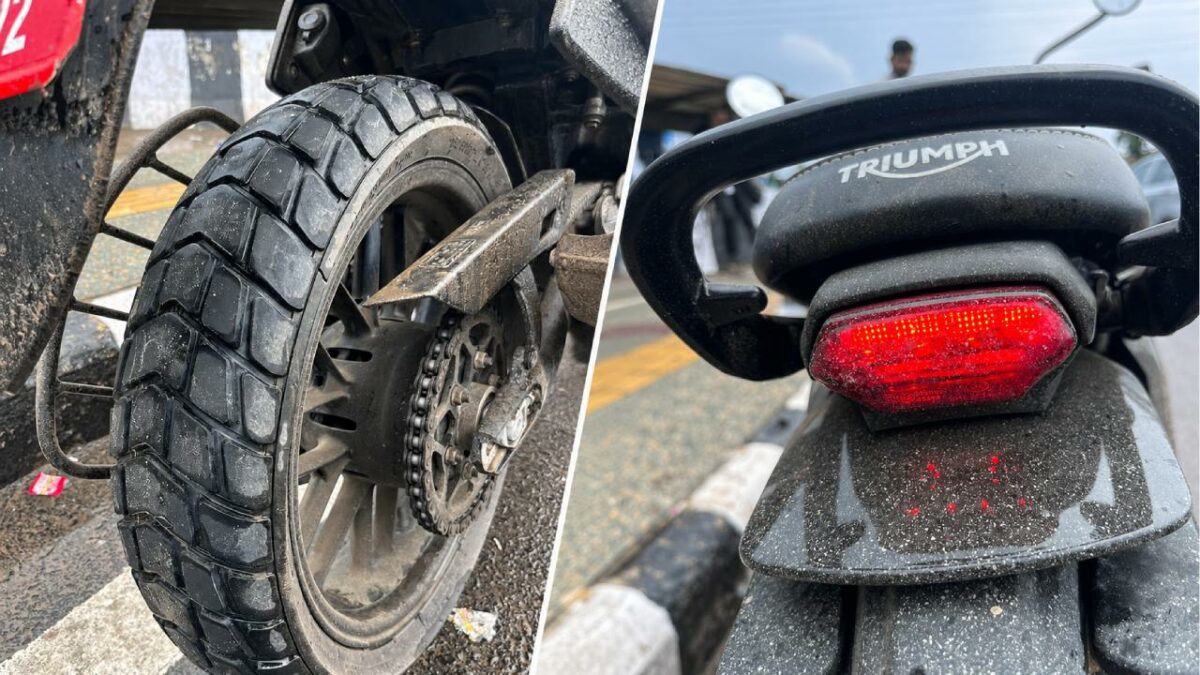
This is where I think it’s important to set the expectations correctly. Despite the Tracker styling and chunky tyres, the Tracker is not an off-road motorcycle. You can take it to soft roads, loose gravel, and unpaved roads. Tracker is not designed to tackle technical sections. The ground clearance and the overall chassis configuration limit what you can realistically do away from the roads. Then you cannot turn off the ABS brakes at the front and rear, which makes it even more difficult if you plan to take it on serious off-road.
Who Should Buy the Triumph Tracker?
I think the Tracker 400 makes the most sense for someone looking for a premium urban motorcycle with a little more personality. We’ve already seen riders in India use motorcycles such as the Speed 400 X as everyday commuter motorcycles. The tracker can play a similar role, but with a more distinctive character. If you want a bike for office commutes and you also like to go out on small road trips on weekdays. This can be a good option for you. It’s also a good choice if you want something different from usual roadsters and scramblers. The tracker has its own identity, and that is a big part of its appeal.
Verdict
The Triumph Tracker 400 is an interesting motorcycle because it doesn’t quite fit into conventional categories. It looks like a flat tracker, rides more like a sporty roadster, and can be used very effectively as a premium commuter. The build quality is excellent, the design is distinctive, and handling is one of its strongest points. No bike is perfect, and so is the tracker. On our test bike, we had some issues related to the faulty sensor of the side stand and fuel meter, which was surely showing, and we have heard from the customer that the service is not up to the mark for what it should be for a premium motorcycle. So would you go for the Tracker, or would you buy a safer bike, something like the Royal Enfield Gurilla?
Editor’s Note
The Triumph Tracker 400 is an interesting motorcycle because it doesn’t try to fit neatly into the usual roadster, scrambler or off-road categories. After spending time with it, I found that its sporty chassis, smooth and eager engine, wide handlebar and distinctive riding position give it a character of its own. However, the tracker-inspired styling can create expectations of serious off-road ability, which the motorcycle simply isn’t designed to deliver. The excellent fit and finish are definite highlights, although the issues we experienced with the side-stand sensor and fuel meter, along with concerns around after-sales service, are things Triumph needs to address on a premium motorcycle. – Yatharth Chauhan, Managing Editor
Also Read: Triumph Scrambler 400 X Detailed Review – All You Need To Know!