

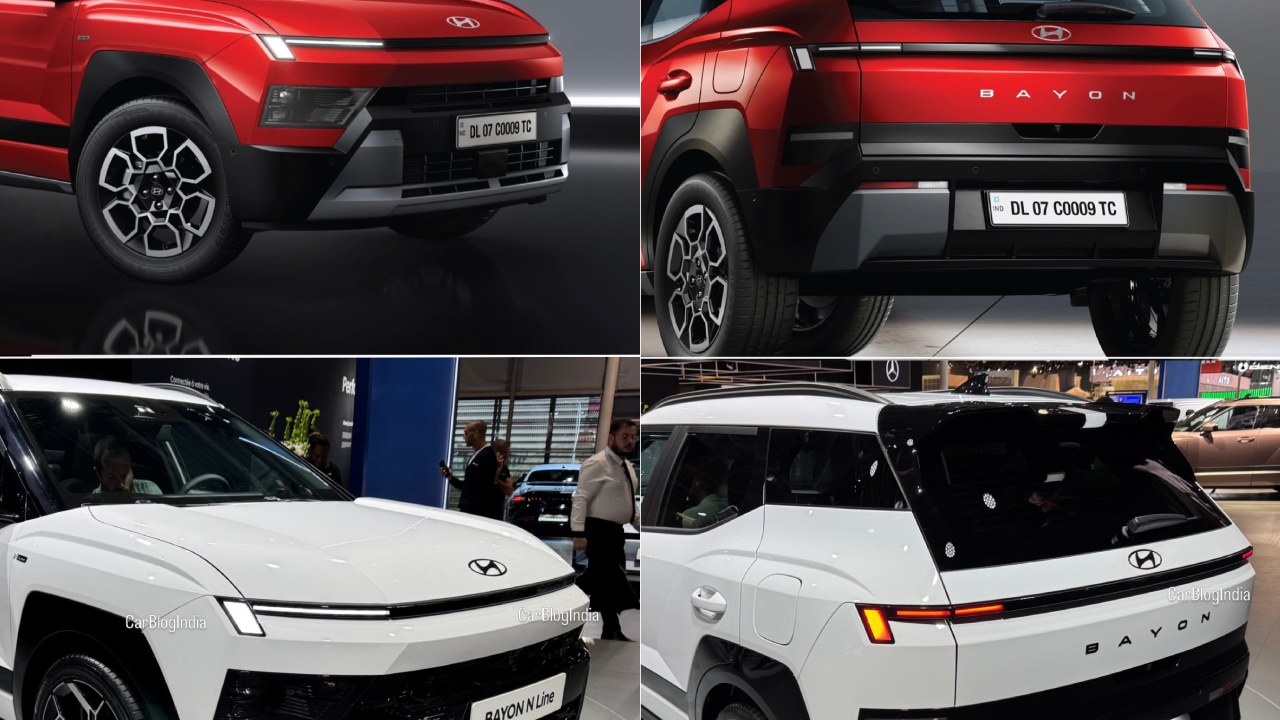
The mid-size SUV has been revealed in two versions – one for the Indian market and the other for the European market
The new Hyundai Bayon has finally been revealed ahead of its October 26, 2026 launch. In fact, bookings for the SUV has already commenced with a token amount of Rs 11,000. Note that the Korean auto giant has also showcased the N-Line iteration of the Bayon exclusively for the Indian market. Hence, the strategy is clear – practical and feature-laden product for the Indian customers and a slightly muscular and performance-focused avatar for the European buyers. In India, it will be positioned between the Venue and Creta in Hyundai’s lineup. However, going by its 4.24 m length, it will give the likes of the mid-size SUVs a run for their money. For now, let us check out the details of this comparison.
New Hyundai Bayon Design – Indian vs European Model
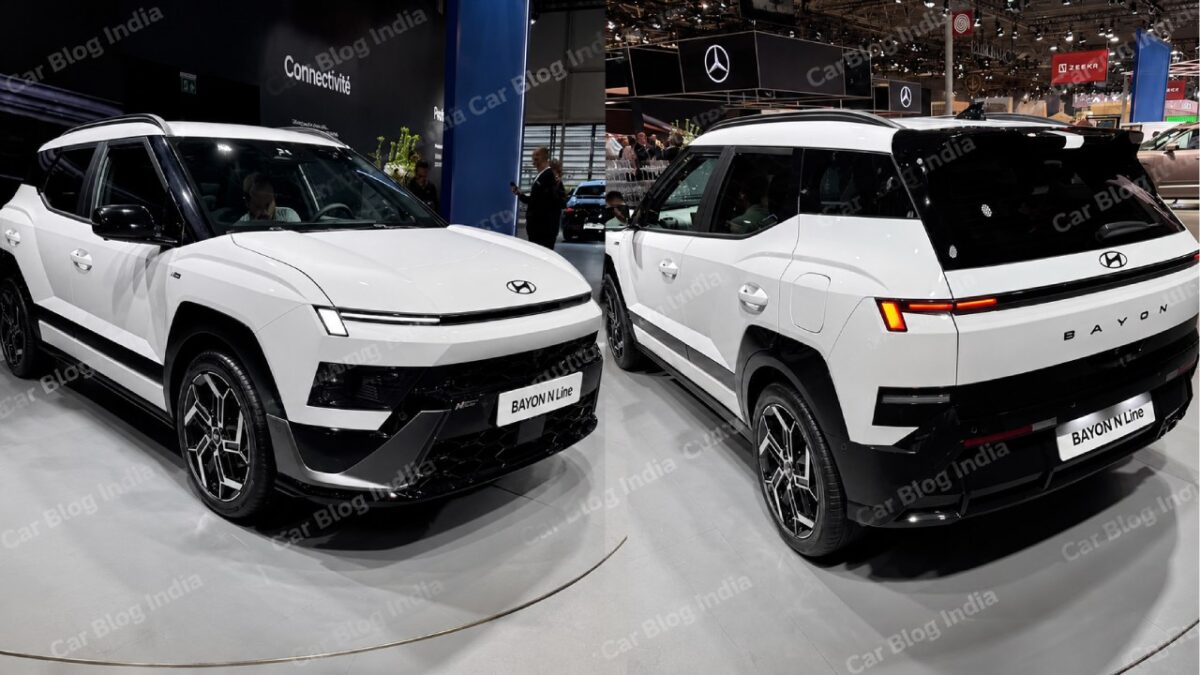
The Indian model gets a slightly more subtle exterior styling in comparison to the Euro-spec N-Line trim. However, I must mention that the differences are only aesthetically relevant. There is no distinct alteration to the exterior components. Hence, the SUV comes with a sleek LED light setup at the front, with the main LED headlamp cluster located on the bumper. The bumper itself is quite sporty with a rugged skid plate element. Moving down the sides showcases sharp creases on the door panels, elegant alloy wheels, functional roof rails, black side pillars and chunky wheel arches with sturdy body cladding. Finally, the tail section contains a shark fin antenna, slim connected LED taillamps and a sporty bumper with adventurous elements.
On the other hand, while the overall design of the European-spec Bayon N-Line is similar to the regular Indian-spec model, there are some key points of differentiation. For instance, the striking components on the bumper are unique and the side skirting is also new. Apart from that, it gets 18-inch alloy wheels with a rather sporty appeal and a few N-Line badges all across the SUV. Therefore, the N-Line iteration has a slightly sportier demeanour in comparison to the regular trim. The dimensions of the SUV are as follows:
| Hyundai Bayon | Dimensions (in mm) |
| Length | 4,245 |
| Width | 1,810 |
| Height (ICE) | 1,565 (16″/17″); 1,570 (18″) (with roof rails) |
| Height (HEV) | 1,555 (16″/17″); 1,560 (18″) (with roof rails) |
| Wheelbase | 2,600 |
New Hyundai Bayon Interior, Features and Safety – Indian vs European Model
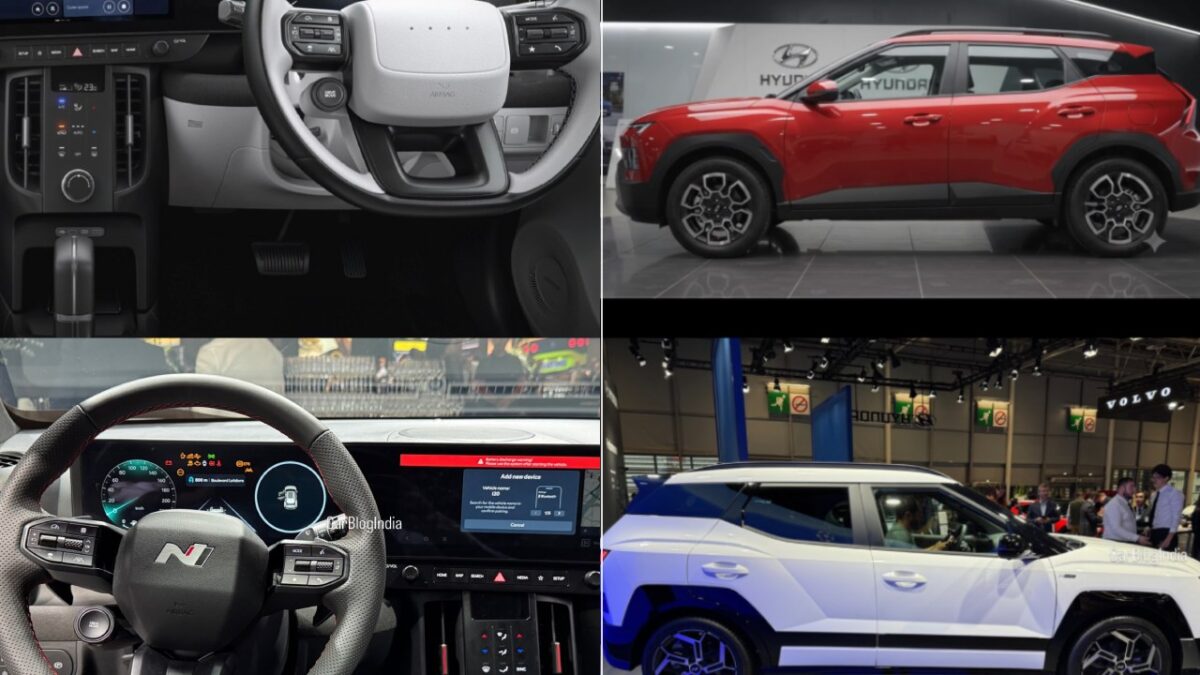
On the inside, the differences become more apparent. Again, the overall layout and configuration are not too far apart from one another. Still, the N-Line version gets a darker theme with red stitching on the upholstery and an N badge on the steering wheel. In fact, the red stitching is visible on the gear lever, seats, air con vents, etc. Also, the brake and accelerator pedals get a metallic finish. However, the SUVs are loaded to the brim when it comes to tech, connectivity and convenience amenities. These include:
| Hyundai Bayon (Indian) | Hyundai Bayon (European) |
| HMIL’s first-ever Generative AI Voice Assistant | Hyundai Digital Key 2 |
| NVIDIA-accelerated Connected Car Navigation Cockpit (ccNC) | Dual 12.3-inch Curved Displays |
| 19 Controllers for Over-the-Air (C-OTA) Updates | Wireless Apple CarPlay and Android Auto |
| Dual (12.3-inch + 12.3-inch) Curved Panoramic Displays | 8-speaker Bose Premium Sound System |
| Hyundai Bluelink with more than 70 Connected Features | Hyundai SmartSense Driver Assistance Package |
| Multi-language User Interface | Surround View Monitor |
| Voice AI Powered by SoundHound AI | Highway Driving Assist 2 |
| Smartphone and Smartwatch Connectivity | Front Ventilated and Heated Seats |
| Personalised Control Panel | Reclining Rear Seats |
| 500 Embedded Voice Commands in English, Hindi, Tamil, Bengali, Telugu and Hinglish | Panoramic Sunroof |
| Real-time Smart Driving Assistance | Adaptive Regenerative Braking with Steering-wheel Paddle Control (HEV) |
| Wireless Phone Charging | |
| Dual-zone Automatic Climate Control | |
| Dual Ambient Lighting | |
| Soft-touch Materials | |
| 440-litre Luggage Space |
New Hyundai Bayon Specs – Indian vs European Model
Now, the Indian version of the new Hyundai Bayon will draw power from the familiar 1.5-litre naturally aspirated petrol mill, which is good for a healthy 115 PS and 144 Nm of peak power and torque, respectively. This engine can be paired with either a 6-speed manual or an IVT automatic gearbox to cater to all sorts of buyers. On the other hand, the Euro-spec Bayon gets a 1.0-litre turbo petrol engine in two states of tune – 90 PS and 115 PS, while a strong 1.6-litre hybrid mill joins in later, generating 138 PS of peak power. The torque figures range from 172 Nm to 264.8 Nm. Hence, this is a major point of differentiation between the two models.
| Specs | Hyundai Bayon (India) | Hyundai Bayon (Euro) |
| Engine | 1.5L Petrol | 1.0L Turbo and 1.6L Hybrid |
| Power | 115 PS | 90 PS – 138 PS |
| Torque | 144 Nm | 172 Nm – 264.8 Nm |
| Transmission | 6MT / IVT | 6MT / 7DCT |
Editor’s Note
The new Hyundai Bayon is an interesting addition to the brand’s SUV lineup, particularly because Hyundai appears to be taking a different approach for Indian and European buyers. The Indian version focuses on technology, connectivity and everyday usability, while the European N-Line gets a sportier design and a wider range of powertrain options, including turbo-petrol and hybrid engines. I particularly like the dual-screen setup and the new AI-powered voice assistant being introduced for Indian customers, although the real-world usability of these features will matter more than the specifications on paper. The 1.5-litre naturally aspirated petrol engine is a familiar and practical choice, but it lacks the performance-oriented appeal of the European powertrains. Ultimately, the Bayon’s success in India will depend on its pricing, driving experience and how convincingly it fits between the Venue and Creta. – Yatharth Chauhan, Managing Editor
Also Read: Hyundai Bayon Revealed in India – Launch on October 26, Bookings Open