

The Japanese auto giant currently sells just three vehicles in India – Amaze, City and Elevate
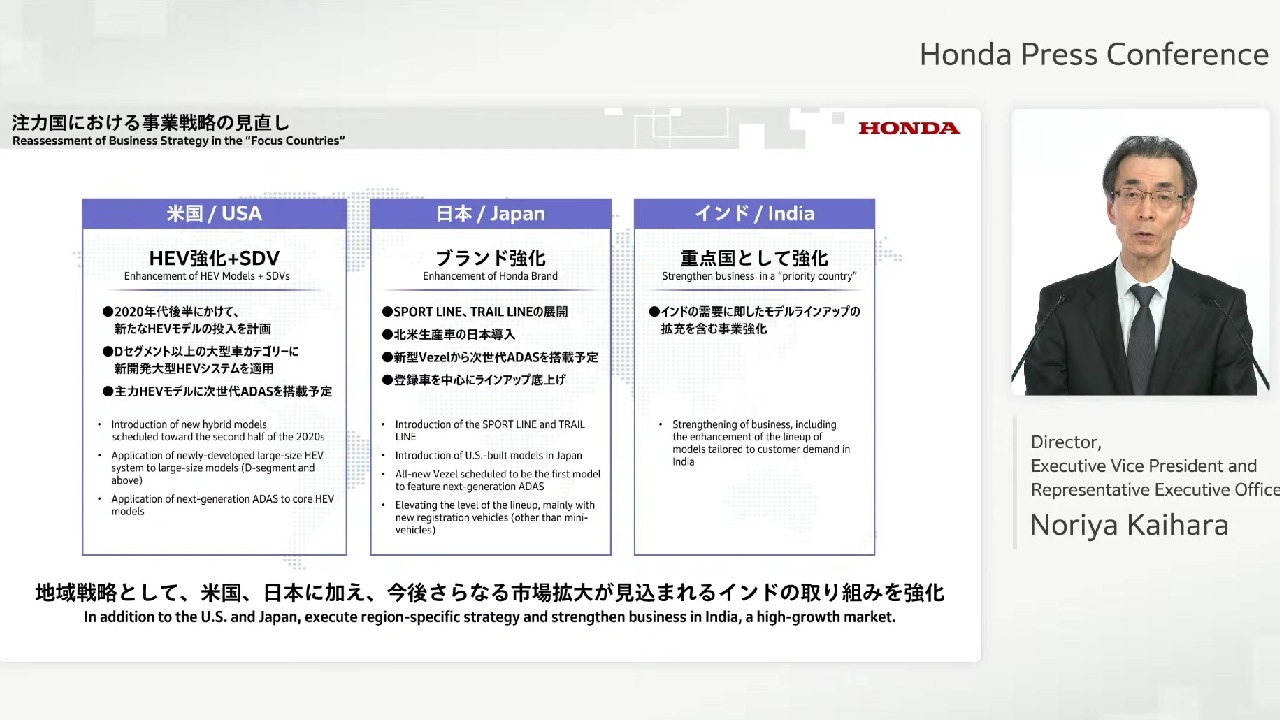
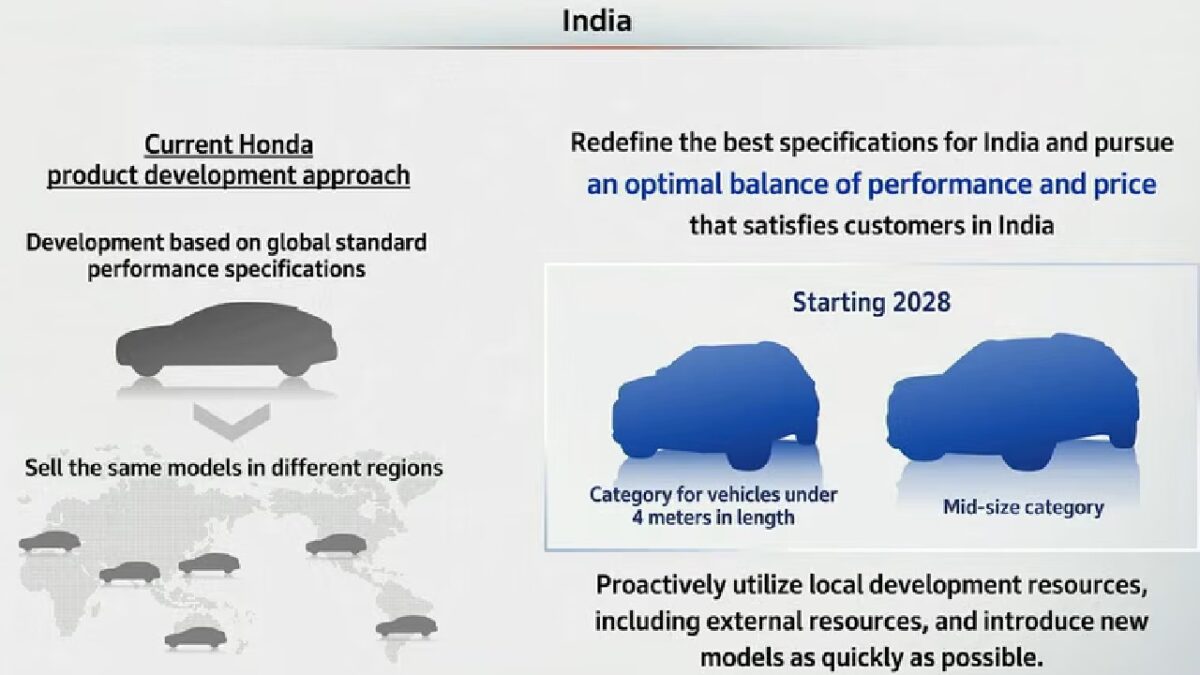
At its recent global financial press conference held in Japan, Honda announced an entirely new product development strategy to approach the Indian market. Note that the Japanese car marque commenced its India operations with the launch of the iconic City sedan back in January 1998. Despite being in the market for over 30 years (the compact was established in India in December 1995), it only commands less than 2% market share. That is a concerning issue for Honda India. To address that, a new approach has been devised by the top officials at Honda.
Creating Products Specifically For India
Until now, most of Honda’s vehicles have carried the global standards, demeanour and philosophy. For some reason, Honda has almost directly brought these packages to our market. However, I believe that the correct approach should have been to invest time and resources in India to understand the mindset of the customers. While I admit that it might not have been a priority for Honda back in the day, once the market started evolving and expanding, it made sense to consider India a separate region from other global locations. As a result, Honda should have catered exclusively to the sensibilities and preferences of the Indian consumers.
Since it has not been able to do that until now, its models have started losing traction. It had to pull the plug on many attractive cars simply because they didn’t stand out among the competition. Some other foreign carmakers kept introducing more enticing products and the buyers got drawn to them instead. In fact, that is the reason why Honda has just 3 models in its lineup today. You would imagine that a company which has been in the market for over 3 decades should have figured out the needs and desires of Indian car buyers.
Furthermore, even the cars on sale are not selling in very high volumes. Therefore, Honda desperately needs a fresh approach to address this situation. That is exactly what Toshihiro Mibe, Director, President and Representative Executive Officer at Honda, recognized. He said, “The global standard approach may have been somewhat excessive.” He admitted that Honda has had “an insufficient number of competitive models in each segment.” Talking about the importance of localization, he remarked that Honda is now open to local collaborations and will “utilize local resources, including external resources, to develop and introduce locally tailored models as quickly as possible.”
Localization and 10 New Cars By 2030
Understanding the importance of sourcing local components and establishing a robust regional supply chain is key to success in today’s unpredictable world. In the last 5-6 years, we have seen the kind of issues that could easily cripple industries. The global supply chain, concentrated manufacturing of certain components in small regions, tariff wars, etc., are some of the top reasons which impact many industries, including the automotive sector. Hence, investing in localization makes a lot of sense. We have already seen carmakers like Volkswagen and Skoda reap the benefits of high degrees of localization.
Honda can benefit from something like that in a similar fashion. When the brand develops cars exclusively for a certain market, the R&D that goes into creating these products ensures that the needs of customers are at the top of the priority list. Hence, car buyers get their desired styling elements, tech, in-cabin amenities, safety prowess and performance traits. That has been missing in Honda cars for a long time now. In a previous announcement, Honda said that it would launch 10 new cars in India by 2030, starting with an SUV by 2028. I believe the two main market segments it will target are the compact and mid-size SUV space. These have been among the fastest-growing spaces in the country for a few years now.
Another key area of localization is leveraging the supply chain and experience by selling millions of two-wheelers in India. In fact, just in FY2026 alone, Honda sold a massive 5.8 million (58 lakh) units. Moreover, Mibe mentioned that India has the largest units in operation (UIO). This is particularly impressive since Honda motorcycles cost considerably more than more mass-market bikes on sale. Hence, these aspects hold immense potential for Honda in India. Finally, we can be sure that India is a key market for the Japanese carmaker as Mibe said that Honda has “positioned North America, Japan and India as priority markets for future growth”.
Editor’s Note
Yatharth Chauhan, Managing Editor
Having observed Honda’s journey in India for decades, I believe the brand’s biggest challenge has never been product quality, but the lack of market-specific aggression. Indian buyers evolve rapidly, and manufacturers that fail to adapt quickly often lose relevance despite strong global reputations. What stands out to me is Honda’s recent acknowledgement that a ‘one-size-fits-all’ global strategy no longer works in India. In my view, if Honda genuinely focuses on localisation, competitive pricing and high-demand SUV segments, it still has the potential to regain lost ground in one of the world’s most important automotive markets.
Also Read: New 2026 Honda City Facelift Spotted Testing – What To Expect?