

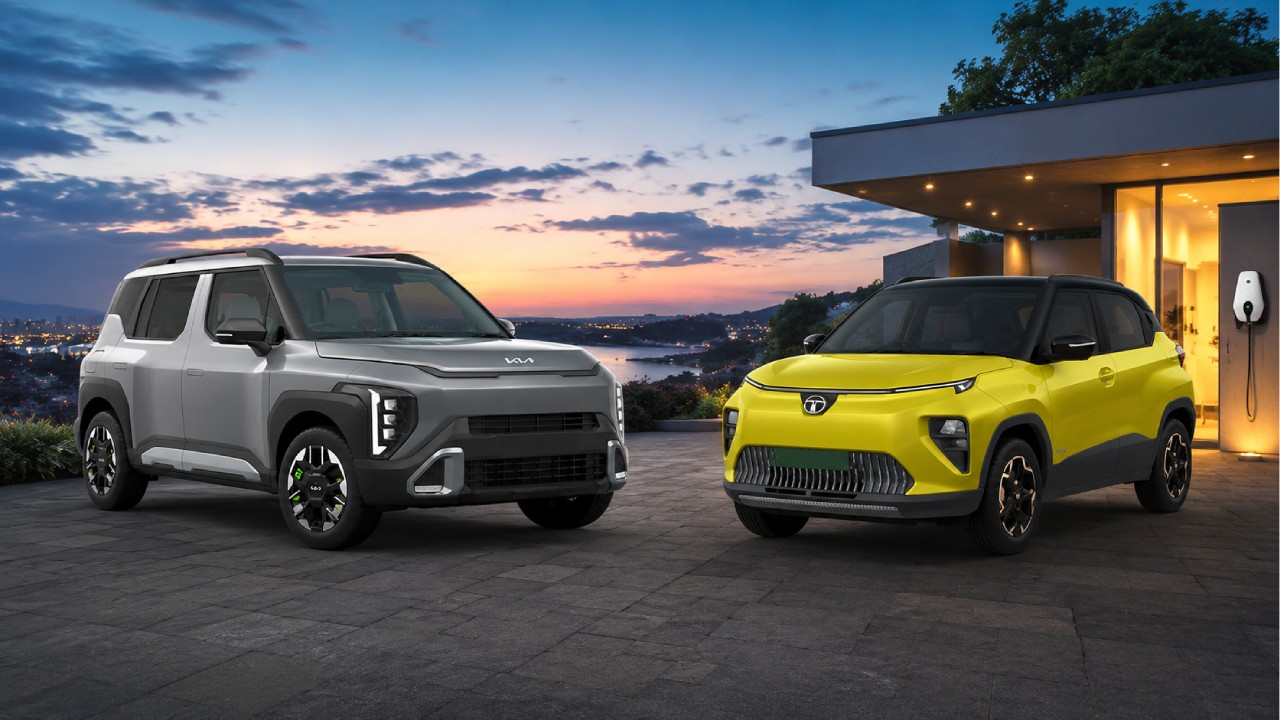
The EV space in India has been growing rapidly in the past few years and new launches are also planned for the near and long-term future
In this post, we compare the upcoming Kia Syros EV and the Tata Punch EV in terms of specs, features, prices, etc. Note that the details pertaining to the Syros EV have not been announced just yet. Still, we can make some logical guesses based on the Syros ICE version and the kind of battery options available on other Kia cars in India like the Carens Clavis EV. On the other hand, the Punch EV continues to be a key product for the Indian automobile giant. Its ICE iteration has been received extremely well by Indian consumers. Tata wants to replicate that success with the electric Punch too. For now, let us delve into the details of this exciting comparison.
Kia Syros EV vs Tata Punch EV – Specs Comparison
The new Kia Syros EV is available with two battery pack options – a 42 kWh unit and a larger 51.4 kWh Extended Range version. The smaller battery offers a claimed MIDC range of 443 km, while the bigger pack stretches this figure to an impressive 526 km on a single charge. The Extended Range variant also delivers a segment-leading 171 PS, enabling the electric SUV to sprint from 0-100 km/h in just 8.1 seconds. Meanwhile, the 42 kWh version produces 135 PS, although both variants generate an identical 255 Nm of peak torque. Charging is equally convenient, with support for a 100 kW DC fast charger that can replenish the battery from 10% to 80% in just 39 minutes.
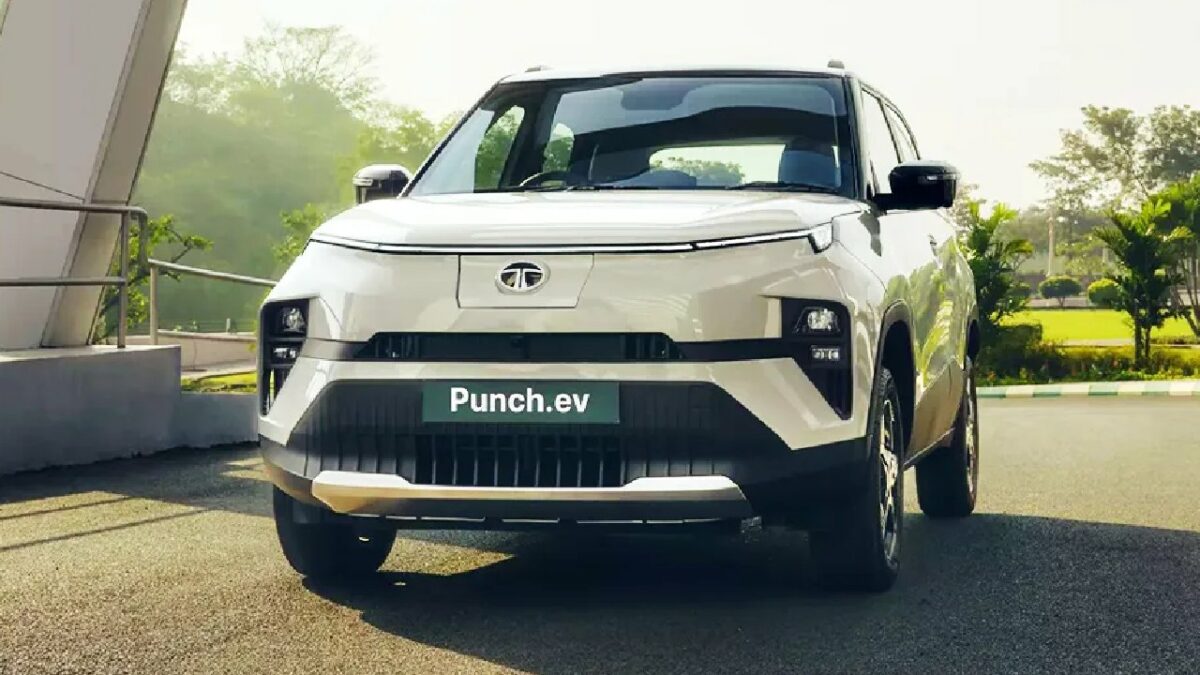
On the other hand, the Tata Punch EV is available with two battery pack options – 30 kWh and 40 kWh. It offers a claimed range of 275-355 km on a single charge. Being a small SUV, the battery options ensure a wide range of prices to attract more customers. The maximum power and torque figures are 87-127 hp and 154 Nm, respectively. With a 65 kW DC fast charger, the EV can be charged from 20% to 80% in a matter of 26 minutes, which is quite handy on highway trips. In any case, we will need to wait for the exact specifics.
| Specifications | Kia Syros EV | Tata Punch EV |
|---|---|---|
| Battery Pack | 42 kWh / 51.4 kWh | 30 kWh / 40 kWh |
| Claimed Range | 443 km / 526 km | 275 km – 355 km |
| Power | 135 PS / 171 PS | 87 hp / 127 hp |
| Torque | 255 Nm | 154 Nm |
| Motor Configuration | Single Electric Motor | Single Electric Motor |
| DC Fast Charging Time | 10% – 80% in 39 min (100 kW DC Charger) | 20% – 80% in 26 min (65 kW DC Charger) |
Kia Syros EV vs Tata Punch EV – Features and Safety Comparison
We know that this is a key strength of Kia products in India. The Korean auto giant loves to offer premium luxury amenities to pamper the occupants. In fact, that is what sets Kia models apart from their respective rivals across the segments it operates in. Also, we know that Syros in the ICE avatar is already among the most feature-laden cars in its class. Hence, we have no reason to believe that it won’t be the case with the Syros EV. The main attractions of the Kia Syros ICE are:
- 30-inch Trinity Panoramic Display Panel including:
- 12.3-inch HD Display Instrument Cluster
- 12.3-inch HD Touchscreen Navigation Cockpit
- 5-inch Touchscreen – Fully Automatic Air Conditioner Control
- Harman Kardon Premium 8 Speakers Sound System
- Panoramic Sunroof
- 64-Colour Ambient Mood Lighting
- 2nd-row Seat Ventilation with Slide and Recline (Segment-first)
- Dual Tone Grey Leatherette Seats
- 4-Way Powered Driver Seat
- Front and Rear Ventilated Seats
- Electric Parking Brake with Auto Hold
- Smartphone Wireless Charger
- Smart Pure Air Purifier with AQI Display
- Auto Antiglare Rear View Mirror with Kia Connect Controls
- Smart Dashcam with Dual Camera
- Kia Connect with ‘Hey Kia’ Command
- Drive Modes – Eco, Normal and Sport
- Traction Control Modes – Sand, Mud and Snow
- Paddle Shifters
- 360-Degree Camera with Blind View Monitor in Cluster
- Rear Sun Shade Curtain
- Kia Connect 2.0
- Over-the-Air (OTA) Software Updates with Automatic Updating of 22 Controllers (Segment-first)
- Hindi, English and Bengali VR Commands
- Valet Mode
- Lounge-inspired Interior Theme
- Best-in-Segment Head Room, Shoulder Room and Leg Room
- Find My Car with Surround View Monitor
- Stolen Vehicle Notification
- Remote Window Control
- 6 Airbags
- ABS with EBD and Brake Assist
- Electronic Stability Control
- Hill-start Assist Control
- Front and Rear Parking Sensors
- ISOFIX Child Seat Mounts
- Level 2 ADAS
- Blind View Monitor in Cluster
- 360-Degree Camera
Similarly, even the Tata Punch EV comes with all the latest gadgets and gizmos to attract buyers. Some of the main highlights include:
- 10.25-inch Touchscreen Infotainment Display
- 10.25-inch Digital Cockpit
- Wireless Apple CarPlay and Android Auto
- Air Purifier
- Multiple Voice Assistants
- Electric Adjust and Auto Fold ORVMs
- Front Ventilated Seats
- Auto-dimming IRVM
- Wireless Charging
- iRA.ev and Smartwatch Connectivity – with 10 additional features
- 360° Surround View Camera System
- Hill Descent Control
- 6 Airbags
- Cooled Glovebox
- Alexa Car to Home
Kia Syros EV vs Tata Punch EV – Price Comparison
The new Kia Syros EV, with the BaaS, starts at an attractive Rs 7.99 lakh, ex-showroom, with the battery EMI of Rs 3.3 per km. Without BaaS, the EV with the smaller battery ranges between Rs 13.49 lakh and Rs 15.99 lakh, while the version with the bigger battery starts at Rs 16.99 lakh and goes up to Rs 19.99 lakh, ex-showroom. On the other hand, the Tata Punch EV retails between Rs 9.69 lakh and Rs 12.59 lakh, ex-showroom, without the BaaS. With BaaS, the starting price drops to an impressive Rs 6.49 lakh + Rs 2.60 per km battery rental. Hence, the Tata Punch EV is slightly more affordable than the Syros EV.
| Price Comparison | Kia Syros EV (w/o BaaS) | Kia Syros EV (w/ Baas) | Tata Punch EV (w/o BaaS) | Tata Punch EV (w/ BaaS) |
| Base Model | Rs 13.49 lakh | Rs 7.99 lakh + Rs 3.3 per km | Rs 9.69 lakh | Rs 6.49 lakh + Rs 2.6 per km |
| Top Model | Rs 19.99 lakh | – | Rs 12.59 lakh | – |

Editor’s Note
Yatharth Chauhan, Managing Editor
The upcoming Kia Syros EV has the potential to shake up the compact electric SUV segment if Kia manages to combine its feature-packed cabin with a competitive price tag. On paper, the Syros EV appears to have a clear advantage in terms of expected range, performance and premium equipment, while the Tata Punch EV continues to score heavily on affordability and accessibility. Tata’s BaaS model and attractive entry price make EV ownership easier for first-time buyers, whereas the Syros EV could appeal to customers looking for a more premium experience. Ultimately, the battle between these two could come down to whether buyers prioritize value for money or technology and driving range. The final verdict will depend on Kia’s pricing strategy, which could prove to be the biggest deciding factor.
Also Read: New Citroen e-C3X vs Tata Punch EV – Which EV To Buy?