

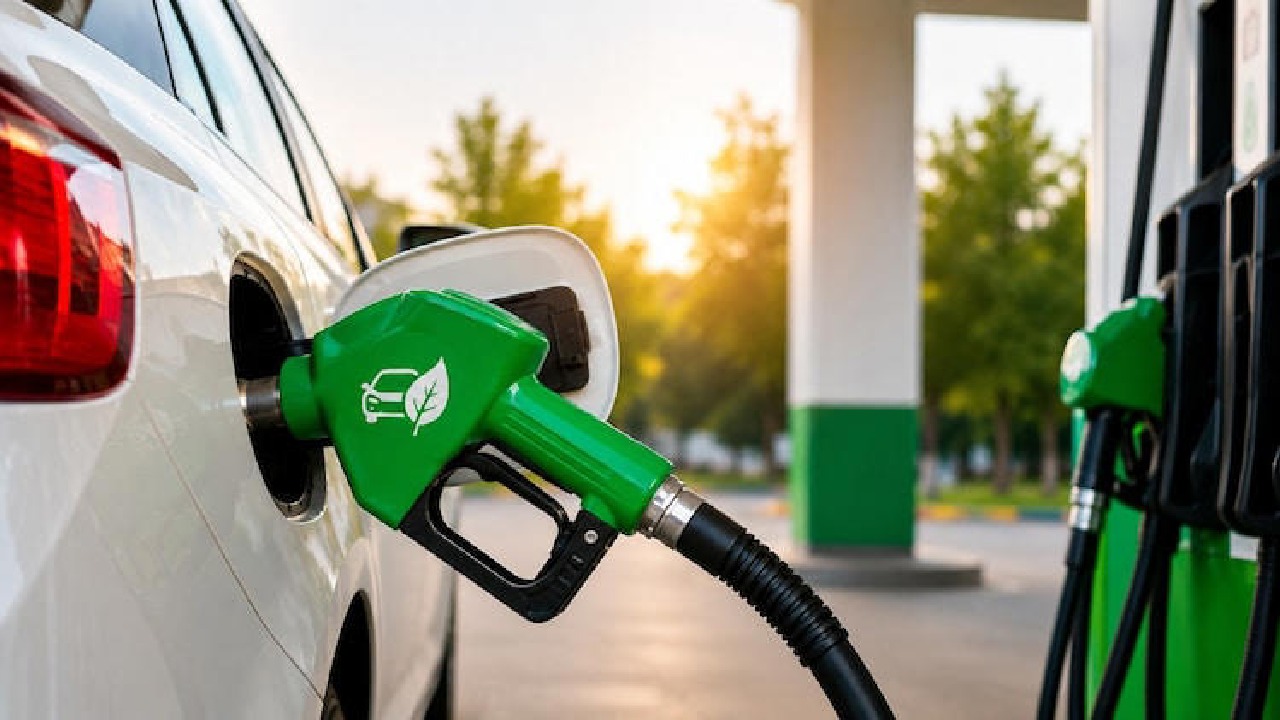
The Indian automobile industry is undergoing yet another subtle transformation with the new petrol-ethanol blended fuel
The government of India has officially started the preparation for introducing the next phase of ethanol-blended petrol in the country. We know that there was a huge backlash from the citizens after the instructions to sell only E20 fuel at all petrol stations in the country were announced a few months. As a result, it was decided that the car owners couldn’t be forced to put E20 petrol in their vehicles. Still, the E20 petrol is now available at every petrol station in the country along with the regular petrol. Similarly, the next step is to increase the Ethanol mixture in petrol up to 30%. Hence, the new fuels that will be on offer at petrol pumps will be E22 (22% Ethanol), E25 (25% Ethanol), E27 (27% Ethanol) and E30 (30% Ethanol).
E22/E30 Petrol Ethanol Blend Standards – Your Questions Answered
Q. Why is India increasing ethanol blending?
A. Well, there are multiple strategic reasons for this practice. The main factor is the reduction of crude oil imports in the country. This saves the country a lot of money. In fact, in the last few months of the global conflict, it has become even more pertinent to reduce dependence on imported crude oil as much as possible. In turn, this will also minimize India’s exposure to reliance on fuel supplies and energy needs. Secondly, ethanol is mainly produced from sugarcane, maize and surplus food grains. Therefore, higher production will ensure that the Indian farmers benefit directly from it. Finally, we know that Ethanol burns cleaner than regular petrol, which can bring the tailpipe emissions down. All these factors warrant the further development of Ethanol-blended petrol.
Q. Has the government officially approved E30 fuel?
A. The Bureau of Indian Standards (BIS) has officially notified standards for E22, E25, E27 and E30 fuels. However, there are a few reports which suggest that this time around, the nationwide implementation will not be sudden like in the case of E20. Rather, the plan is to allegedly complete this transition by 2030.
Q. Will my existing car run on E22-E30?
A. This is a slightly tricky question to answer. If you are running an extremely old model which might not even be compatible with E20 fuel, then it will certainly not be suitable for E22 or higher fuels. As a matter of fact, even those cars engineered for E20 fuel will need to be updated if they were to run on higher ethanol blended fuels. In general, a higher ethanol blend affects fuel lines, rubber seals, injectors, engine calibration and combustion characteristics. Hence, it must be said that a vehicle designed specifically for higher Ethanol blends will be able to work with E22-E30 fuel effectively. It remains to be seen how the government approaches this aspect.
Q. What are flex-fuel vehicles?
A. Flex-fuel vehicles are special automobiles which are engineered to run on varying mixtures of ethanol-petrol blends. In fact, these could even be as high as E85 to E100. These are particularly common in countries like Brazil, the U.S. and parts of Europe. Going forward, the Indian government is also planning to go in this direction.
Q. Will E30 petrol reduce mileage in my car?
A. We must understand that the energy per litre of ethanol is lower in comparison to petrol. Therefore, the fuel efficiency will be negatively impacted to a small extent. However, the proper calibration of these engines will ensure that the outcome remains minimal. Hence, the mileage will reduce, but the exact number can’t be ascertained yet.
Q. Can E30 damage older cars and motorcycles?
A. As mentioned previously, the E30 fuel can definitely cause damage to cars which are not designed to run on this fuel. The main aspects include corrosion, rubber component degradation, injector deposits, cold-start problems, reduced long-term reliability, etc. However, to know the exact impact, the government has asked ARAI to study the effect of E25 fuel on existing vehicles before the mass implementation process starts.
Q. Will E30 petrol be cheaper?
A. Now, this will only be possible after considering the entire production process of Ethanol in India. While one might think that sourcing surplus sugarcane from local farmers is the only big investment cost, it must be understood that the entire process also includes things like government taxes, crude oil prices, blending logistics, etc. Also, because the mileage will also be slightly lower, the overall cost calculation remains a rather complex exercise.
Q. How can I check if my vehicle is ethanol-compatible?
A. There are multiple ways to know the status of your vehicle’s ethanol compatibility. For instance, you can read the owner’s manual, ask the manufacturer directly, look for “E20” labels and verify official compatibility lists. In any case, one can be assured that the newer models are E20-ready from the factory. Moreover, the car companies will ensure that there is enough awareness in the market about the exact compatibility of their models with Ethanol-blended petrol.
Editor’s Note
Yatharth Chauhan, Managing Editor
Having tracked fuel policy changes in India for years, I believe the move towards higher ethanol blending is not just an automotive shift, but a broader economic and strategic decision. While reducing crude oil dependence and supporting local agriculture make complete sense from a national perspective, the real challenge will lie in ensuring a smooth transition for millions of existing vehicle owners. What stands out to me is that the industry is slowly moving towards flex-fuel and hybrid-compatible technologies to future-proof products. In my view, awareness and phased implementation will be absolutely critical, because Indian consumers are extremely sensitive to reliability, running costs and long-term durability.
Also Read: Maruti YMC 3-row Electric MPV Spotted Testing in Shimla