

The mid-size SUV was revealed a few days ago for the Indian and European markets
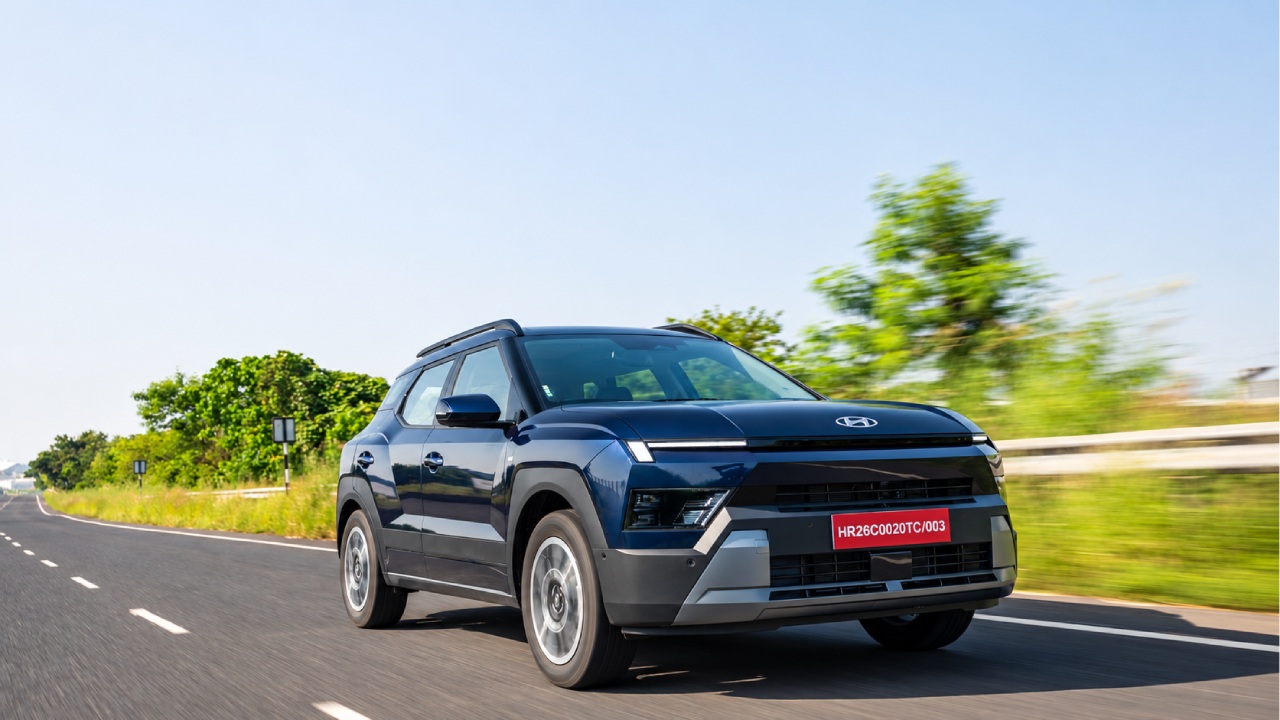
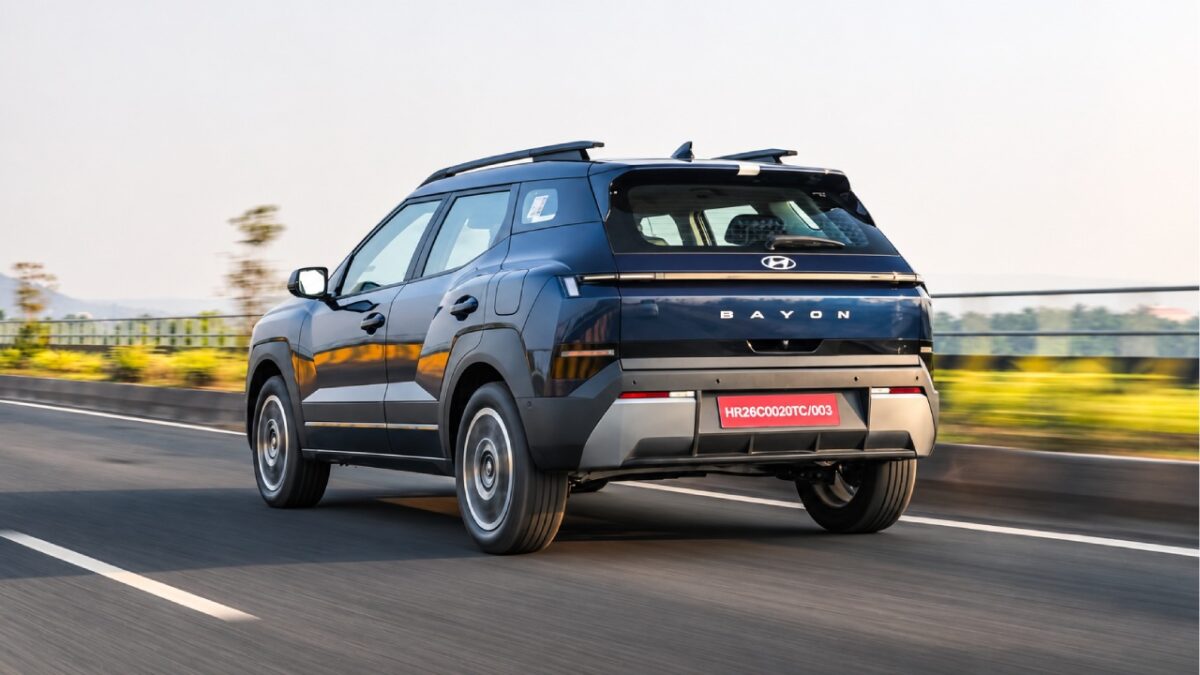
Updated on 06.11.2026 – I got the opportunity to review the new Hyundai Bayon and would love to share my experience with our readers. On the outside, the Bayon boasts a rather rugged stance with the latest Hyundai design language. This includes various “H” elements in the lighting and plastic cladding on the bumper for that rugged look. I feel the Bayon has more of a crossover kind of appearance with a sleeker profile in contrast to a boxy silhouette we see on the Creta. Additionally, the quarter glass at the rear neatly integrates into the spoiler. I particularly like the unique styling element for the high-mounted stop lamp. Finally, the wrap-around taillamps and sturdy bumper with a skid plate lend the SUV an adventurous look.
Interior and Features
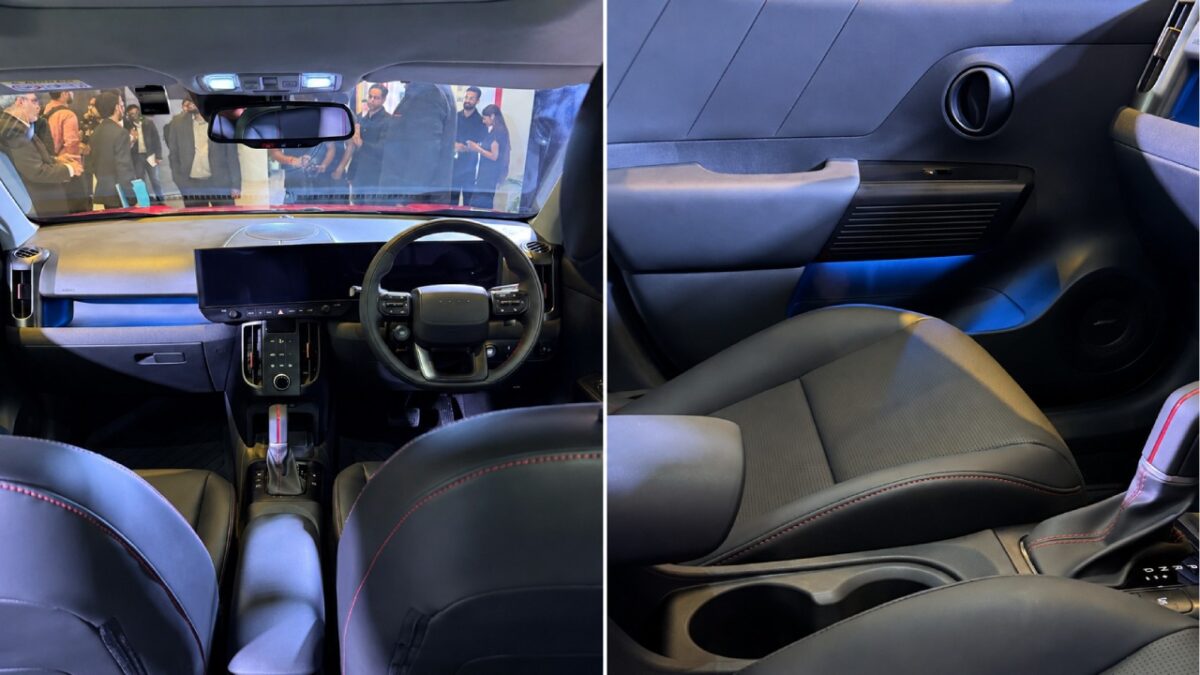
On the inside, the cabin feels more unconventional simply because of the unique styling elements. I appreciate the curved dual display on the dashboard, which gives it a sporty feel. Moreover, the centre console is quite unique and I get the vibe of it being among the most tech-infused cabins in the segment. To drive this point home, I must mention the Generative AI capabilities powered by Perplexity. As a consequence, the voice commands aspect has been taken to the next level, where users can now interact with the AI engine in the vehicle. Some of the other attractions include a panoramic sunroof, surround view monitor, ventilated seats, and an 8-way powered adjustable driver’s seat.
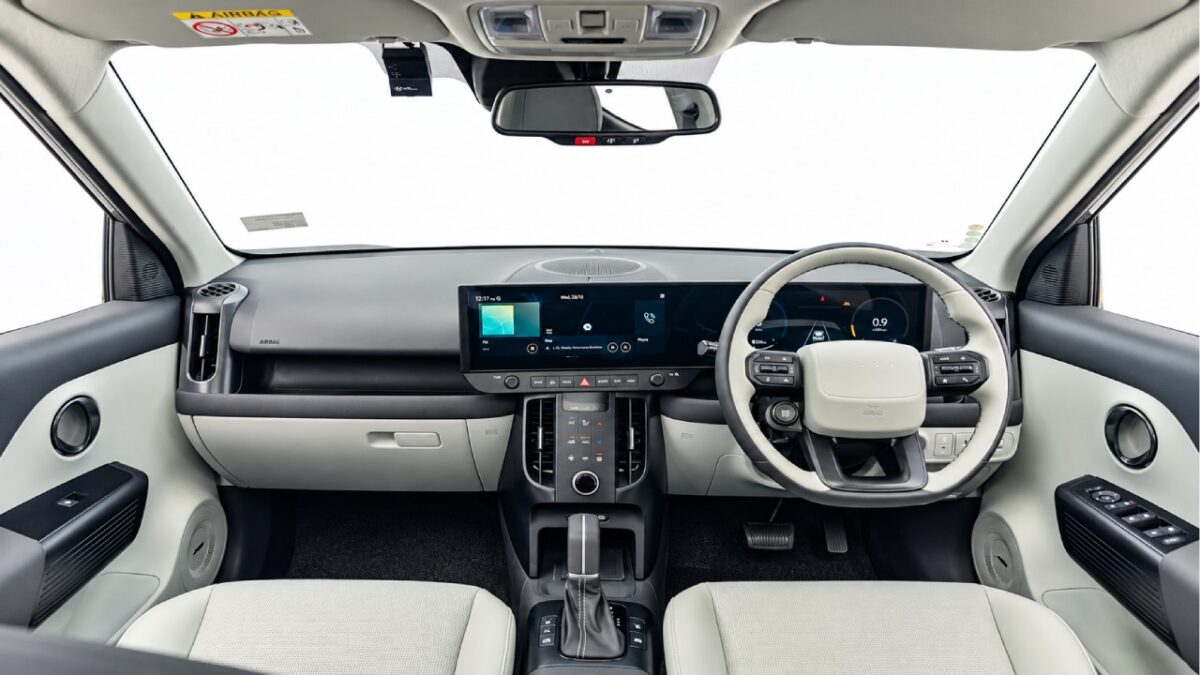
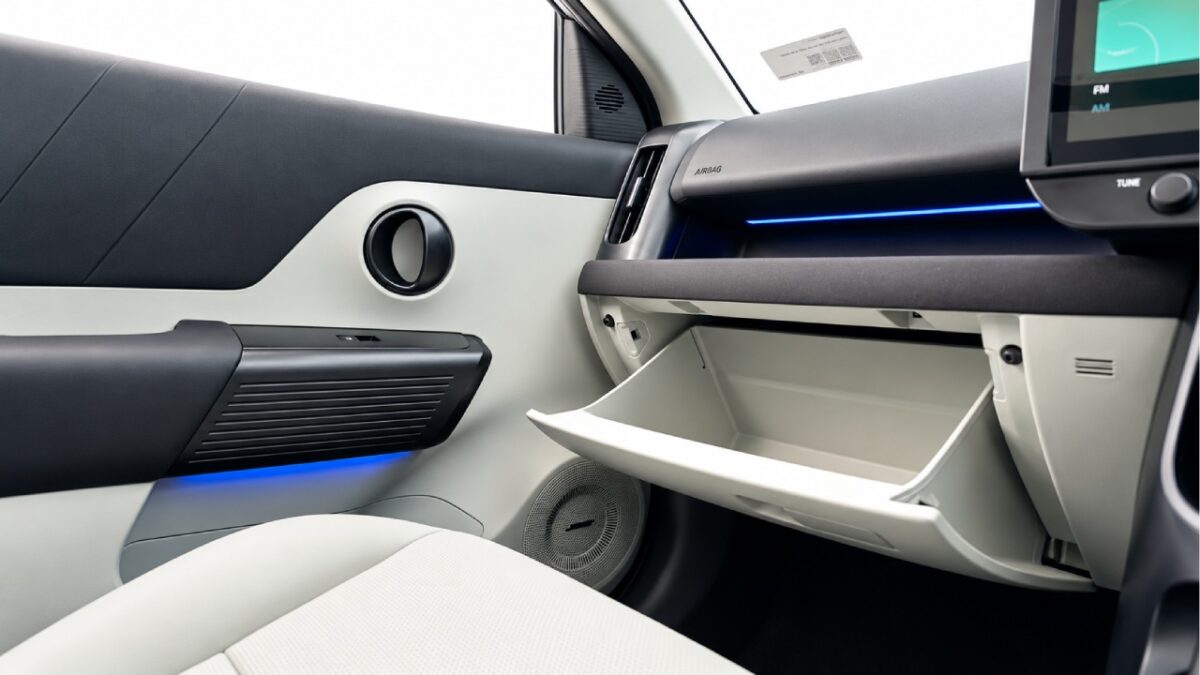
However, I believe the door handles are so unconventional that they might remind you of the age-old Daewoo Matiz. Similarly, I am certain that the customers will miss the electric tailgate feature. For me, the under-thigh support was a bit low, but it won’t be a problem for anyone under 5’8’’. Taking the unconventional theme further, the electronic handbrake has been positioned on the right side of the steering wheel instead of the centre console. What caught my attention was the soft-touch section on the dashboard to lend it a premium feel.
As I sat on the rear seat, I was pleasantly surprised to experience the sheer amount of legroom on offer for my frame of 5’11’’. Hyundai claims that the legroom is 963 mm, which is quite impressive for a vehicle of this size. What further improves the spacious feel are the scooped-out sections on the back of the front seats. In fact, I am happy to report that the 2,600 mm wheelbase is visible once you sit on the rear seats. Taking care of the convenience for the rear passengers, there are elements like the seat pockets, AC vents, phone storage and a USB Type-C charging port. Also, the premium Bose Surround Sound system enhances the overall premium quotient of the car. I also believe that on long journeys, the retractable rear seats will certainly aid comfort. Being a family SUV, the 505-litre boot compartment is quite handy. In fact, this ensures that the large suitcases can be adjusted relatively comfortably.
Driving Impressions
As we know, the Hyundai Bayon comes with the familiar 1.5-litre naturally aspirated petrol engine that is good for 115 PS and 144 Nm of peak power and torque, respectively. There are options to choose between a 6-speed manual or an iVT (CVT) automatic gearbox. I was driving the automatic version for this review. Note that this is the same engine that powers the Creta. During my time with the SUV, I felt that the power delivery is well spread out for most use cases. You won’t feel any lack of grunt in most everyday situations, including city and highway rides. Only if you are looking for an engaging driving experience could you feel a bit wanting for that turbo boost.
I must also mention here that Hyundai has really tuned this engine-transmission combination rather well. We know that CVTs are typically associated with that rubber-band effect. However, that is well contained on the Bayon. In fact, the manual mode offers the steps for the CVT for better control. Apart from that, the Bayon gets a Dash Mode where the engine responds better when it senses a hard press on the accelerator pedal. I would estimate that the Bayon can give you a mileage of around 12-13 kmpl in the city and 17-18 on the highways. Needless to say, that will strongly depend on the driving style. Remember that Hyundai will bring the CNG version in the coming months for those consumers who want low running costs.
Talking about the ride and comfort, during my time with the SUV, I took it over a diverse range of road surfaces, including speed breakers, non-tarmac surfaces and city roads with potholes. I must say that the overall ride quality is quite impressive, although you might feel slight jitters at low speeds. In terms of handling, the steering is light but not lifeless. As a result, the driver stays confident even while pushing the car into the corners. Finally, the Level 2 Pro ADAS enhances the active safety of the vehicle. Hyundai has already announced that the Bayon has been designed keeping 5-star Indian safety standards in mind.
Verdict
With prices starting at Rs 50,000 less than its arch rival, the Maruti Victoris, the new Hyundai Bayon is certainly here to compete. However, the top variants have a price overlap with the Creta. Still, the Bayon will have its distinct customer base consisting of people who want the best value for the buck. With the next-gen Creta in the making, the Bayon will make even more sense in terms of pricing. Now, all that remains to be seen is how well the buyers embrace the new Bayon.
New Hyundai Bayon Launched – Technology Leads The Way!
Originally published on 26.10.2026 – Hyundai Motor India Limited (HMIL) has launched the all-new Bayon SUV for India. The Korean auto giant has positioned the Bayon between the existing Venue and Creta. This is a relatively unique product and boasts all the latest tech, connectivity and convenience amenities. In fact, Hyundai has engineered the SUV for 5-star Indian safety standards and loaded it with a slew of active and passive safety functions, including Level 2 Pro ADAS. In fact, the point of distinction in contrast to the rivals is the tech aspect. Furthermore, Hyundai is anticipating 2.5 lakh sales from the Creta and Bayon to dominate the mid-size SUV segment. For now, let us delve into the details of what the new SUV embodies.
Hyundai Bayon – Price
The new Hyundai Bayon SUV starts at Rs 10 lakh, ex-showroom. These are quite competitive prices, especially in comparison to the Maruti Victoris, which starts at Rs 10.50 lakh, ex-showroom. Note that these are introductory prices. The variant-wise costs are:
| Variant / Price (ex-sh.) | Hyundai Bayon MT | Hyundai Bayon CVT |
| HX2 | Rs 10 lakh | – |
| HX3 | Rs 10.90 lakh | – |
| HX3+ | Rs 11.80 lakh | – |
| HX5 | Rs 12.45 lakh | Rs 13.85 lakh |
| HX6 | Rs 13.57 lakh | Rs 14.97 lakh |
| HX8 | Rs 15.10 lakh | Rs 16.54 lakh |
| HX10 | Rs 16.65 lakh | Rs 18 lakh |
Hyundai Bayon – Exterior Styling
The Hyundai Bayon features a sleek and contemporary exterior design that combines modern styling with rugged SUV elements. At the front, it gets slim LED DRLs connected by a black strip, while the main LED headlamp clusters are positioned towards the edges of the bumper. The sporty front bumper features a rugged skid plate, adding to its adventurous character. Moving to the sides, sharp creases across the door panels, stylish alloy wheels, functional roof rails, blacked-out pillars and chunky wheel arches with prominent body cladding give the SUV a muscular stance. The rear profile continues the modern theme with slim connected LED taillamps, a black strip across the tailgate, a roof-mounted spoiler and a rear wiper. A sporty rear bumper with a rugged skid plate further enhances its SUV appeal. Overall, these design elements give the Hyundai Bayon a distinctive appearance and a commanding road presence, while maintaining a sleek and well-proportioned silhouette. Its dimensions are as follows:
| Dimensions (in mm) | Hyundai Bayon |
| Length | 4,245 |
| Width | 1,810 |
| Height | 1,605 |
| Wheelbase | 2,600 |
Hyundai Bayon – Interior, Features and Safety
On the inside, the Hyundai Bayon boasts a fresh and modern layout for the cabin. This includes a large touchscreen infotainment display, a new Morse Code steering wheel, premium-looking door panels and components. Similarly, the SUV comes with tons of active and passive safety equipment and Hyundai has already mentioned that the Bayon has been engineered considering 5-star Indian safety standards. In fact, the Hyundai SmartSense Level 2 Pro ADAS suite boasts 23 advanced features, 3 radars and 12 parking sensors. Some of the main attractions include:
- HMIL’s first-ever Generative AI Voice Assistant
- NVIDIA-accelerated Connected Car Navigation Cockpit (ccNC)
- 19 Controllers for Over-the-Air (C-OTA) Updates
- Dual (12.3-inch + 12.3-inch) Curved Panoramic Displays
- Hyundai Bluelink with more than 70 Connected Features
- Multi-language User Interface
- Voice AI Powered by SoundHound AI
- Smartphone and Smartwatch Connectivity
- Personalised Control Panel
- 500 Embedded Voice Commands in English, Hindi, Tamil, Bengali, Telugu and Hinglish
- Real-time Smart Driving Assistance
- Hyundai SmartSense Level 2 Pro ADAS
- Front-row ventilated seats
- Electric 8-way adjustable driver seat
- Two-step rear reclining seats
- Fully automatic temperature control
- Rear AC vents
- Panoramic sunroof
- Sliding front console armrest
- Rear centre armrest with cupholders
- Smartphone wireless charger
- C-type USB charging ports
- Smart key with push-button start
- 60:40 split rear seats
Hyundai Bayon – Specs
The new Hyundai Bayon is based on the Global K Enhanced Platform. It is powered by the familiar 1.5-litre naturally aspirated petrol mill, which generates a healthy 115 PS and 144 Nm of peak power and torque, respectively. Performing transmission duties are a 6-speed manual or an iVT (CVT) automatic gearbox. Hence, the needs of all sorts of buyers can be met. With the automatic, the driver can choose between Eco, Normal and Sport mode settings.
| Specs | Hyundai Bayon |
| Engine | 1.5L NA Petrol |
| Power | 115 PS |
| Torque | 144 Nm |
| Transmission | 6MT / IVT |
Editor’s Note
The new Hyundai Bayon makes an interesting entry into the Indian SUV market, positioning itself between the Venue and Creta with a strong focus on technology, safety and everyday convenience. The starting price of ₹10 lakh makes it an attractive proposition on paper, particularly against rivals such as the Maruti Victoris. I find the dual 12.3-inch displays, generative AI voice assistant and Level 2 Pro ADAS package especially noteworthy, as these features could help the Bayon stand out in an increasingly competitive segment. The familiar 1.5-litre naturally aspirated petrol engine, paired with manual and CVT options, should appeal to buyers looking for a straightforward and convenient driving experience. However, its ultimate success will depend on how well these features translate into real-world usability and whether the overall package delivers enough value across the variant range. – Yatharth Chauhan, Managing Editor
Also Read: Hyundai Bayon to Rival Maruti Fronx – What Looks Better on Paper?