

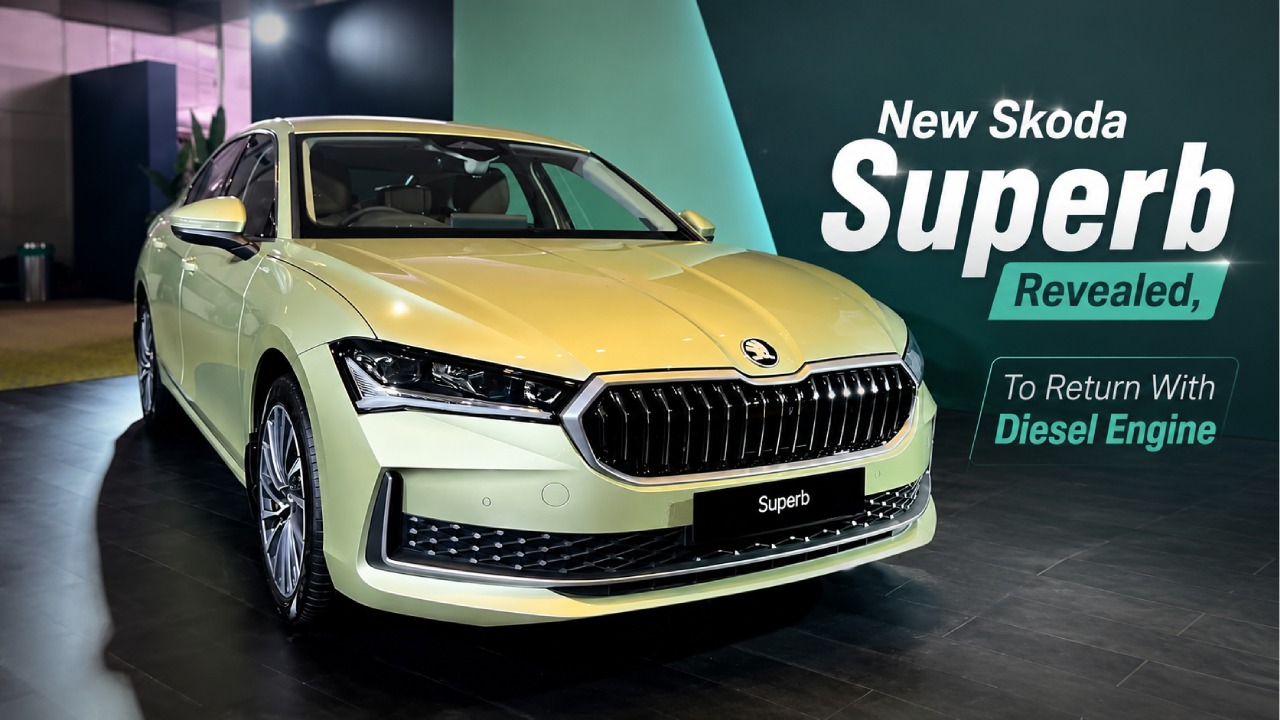
The diesel mill in the VW Group’s portfolio was missing since the infamous dieselgate scandal back in 2015
Skoda has showcased its new Superb luxury sedan, which will make its way to our shores with a diesel heart, most likely in the first part of 2027. We know that Skoda falls under the umbrella of Volkswagen Group. In fact, VW primarily makes engines and transmissions, which carmakers like Skoda, Audi, Porsche, Lamborghini and Bentely utilize. In this post, we are mainly concerned about the relatively mass-market cars like the Skoda Superb, and not the ultra-high-end premium performance monsters from the likes of Lamborghini or Porsche. That is why the news of the upcoming Superb with a new diesel engine piques my interest.
What Was The Dieselgate Scandal?
You might already remember the infamous Dieselgate scam Volkswagen was involved in back in September 2015. To explain it briefly, the US Environmental Protection Agency (EPA) accused Volkswagen of using software (called “defeat devices”) in some VW and Audi diesel cars between 2009 and 2015, which could detect when the vehicle was undergoing an emissions test. As a result, it could activate the full emissions control strategy to pass the laboratory tests for the permitted levels of toxic chemicals like NOx.
Hence, cars passed the test despite generating 40 times more NOx as permitted under the norms in the U.S.. Interestingly, this was not limited to just the VW diesel cars in the U.S., but was found to be true across the globe. On September 20, 2025, the German carmaker admitted to using the cheating software in roughly 11 million (1.1 Crore) diesel cars worldwide. In India, around 3,23,700 cars were affected, including VW, Audi and Skoda vehicles with EA189 engines. In the end, the total amount VW had to pay as fines was around $34.8 billion (approx. Rs 3.3 lakh crore according to today’s exchange rate) globally, out of which around $69 million (approx Rs 658 Crore).
What Happened Post Scandal?
After VW admitted to using the cheating software and paying hefty fines across multiple international markets, including India, it never stopped selling diesel cars. However, there was certainly a shift in strategy. This included a complete withdrawal of diesel models in North America and some other nations, while it continued to sell these cars in Europe in 2016. In India, the diesel-powered Volkswagen and Skoda cars only stopped in 2020 due to concerns over complying with the strict emission regulations.
The main problem was that the after-treatment hardware needed to be installed on diesel cars to ensure adherence to the existing emission norms at the time would take the costs of the vehicles too high. This would have been particularly noticeable in entry-level Skoda and VW cars in India. Being already a price-conscious market, it would have been difficult to sell compact cars at such a huge premium in India. It was around this time that the VW Group announced its India 2.0 initiative. With this, it focused on turbo petrol mills and heavy localization in the upcoming cars. We see the results of that with the success of models like the VW Taigun, VW Virtus, Skoda Kushaq, Skoda Slavia and Skoda Kylaq. Just to get a glimpse of the comparison of how the emission norms in India were around 2020 and today, here is an elaborate table:
| Parameter | BS-IV Diesel | BS-VI Diesel |
|---|---|---|
| NOx | 250 mg/km | 80 mg/km |
| HC + NOx | 300 mg/km | 170 mg/km |
| PM | 25 mg/km | 4.5 mg/km |
| PN | Not applicable in the same manner | 6 × 10¹¹/km |
Return of the New Diesel Engine in Skoda Superb
After discontinuing diesel mills from VW and Skoda cars back in 2020, the German carmaker is reintroducing it with the upcoming Superb, slated for launch next year. This will be the 2.0-litre TDI engine, generating a rather modest 150 hp and 360 Nm of maximum power and torque, respectively. As is the case with most VW and Skoda cars in this segment, this mill will be paired to a smooth-shifting 7-speed DSG transmission. Some reports claim a 0 to 100 km/h acceleration time of around 9.2 seconds. Since it will be a full import, we can expect the ex-showroom prices to be around Rs 55 lakh.
Now, in my opinion, this engine could feel slightly underpowered in comparison to the products typically available at this price point. These include the mid-level German luxury car models and some performance EVs. Hence, the return of the diesel with the new Superb might sound exciting, but it could well be too little too late, especially considering the kind of options the Indian buyers are now exposed to in terms of powerful turbo petrol mills on one hand and efficient hybrids on other.
Having said that, we know that Skoda or Volkswagen loyalists follow their heart and often opt for cars based on their trust and affinity towards these. The legendary TDI moniker on a Skoda car might be enough to entice many such customers. Also, it’s a clear indicator of VW Group’s interest in reintroducing diesel hearts on its premium models. While it remains to be seen how well the new Superb performs once it lands in the Indian showrooms, what’s even more interesting are the prospects of the re-launch of diesels on VW Group cars in India.
Also Read: Skoda Kodiaq RS Review – The Performance SUV That Does It All