

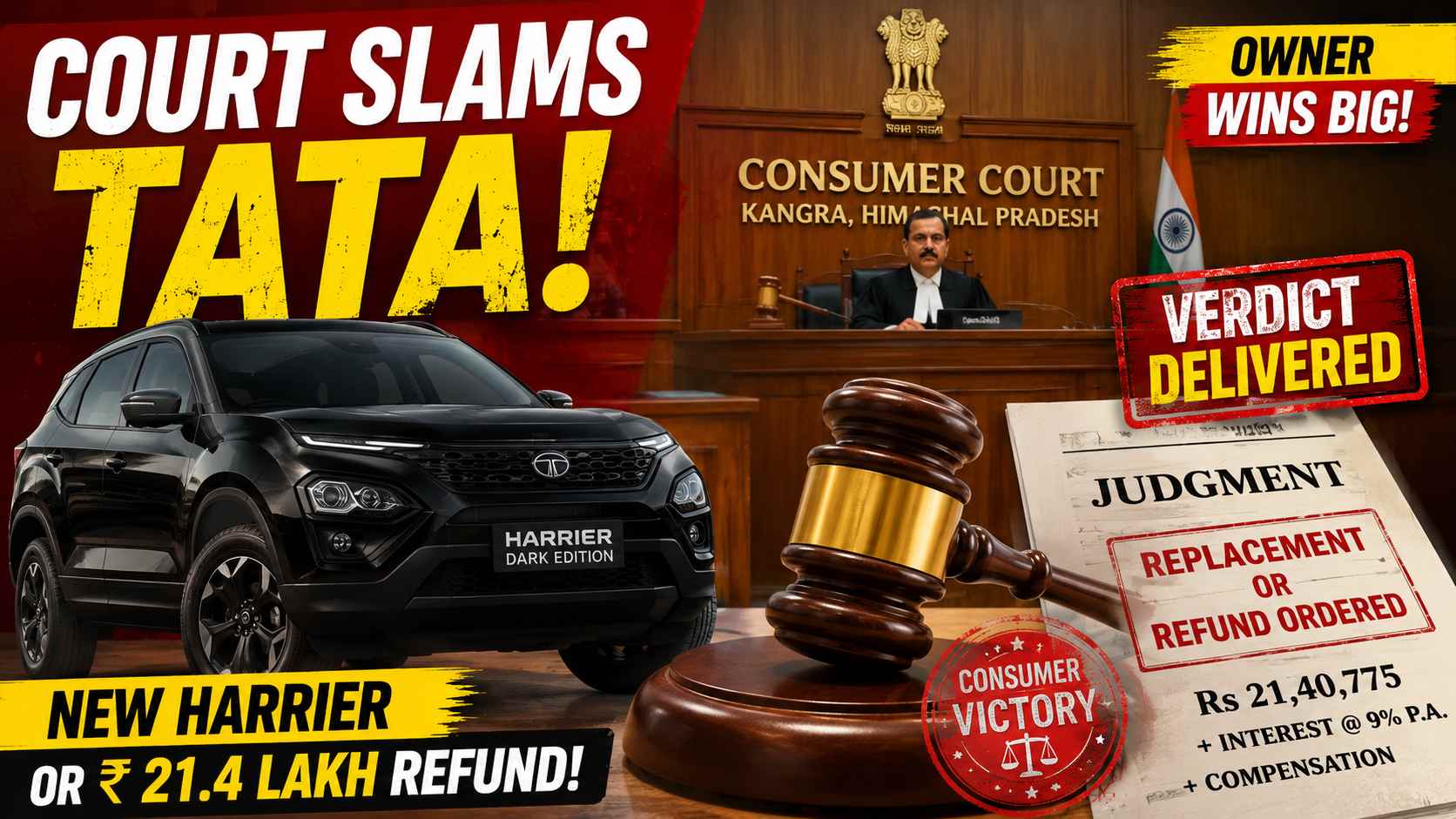
Imagine spending more than Rs 21 lakh on a premium SUV only to watch it break down repeatedly, including twice on highways with your family inside. That nightmare became reality for a Tata Harrier owner from Himachal Pradesh. Now, after a prolonged legal battle, the District Consumer Disputes Redressal Commission in Kangra has delivered a verdict that could have far-reaching implications for India’s automotive industry.
The commission has directed Tata Motors to either replace the defective Tata Harrier with a brand-new vehicle or refund the full purchase amount of Rs 21.40 lakh. The ruling came after the commission concluded that the SUV suffered from an inherent manufacturing defect that posed a potential safety risk. For consumers across India, this judgment reinforces an important principle: repeated repairs do not automatically absolve manufacturers of responsibility when critical defects continue to persist.
Tata Harrier Owner’s Trouble Began Soon After Purchase
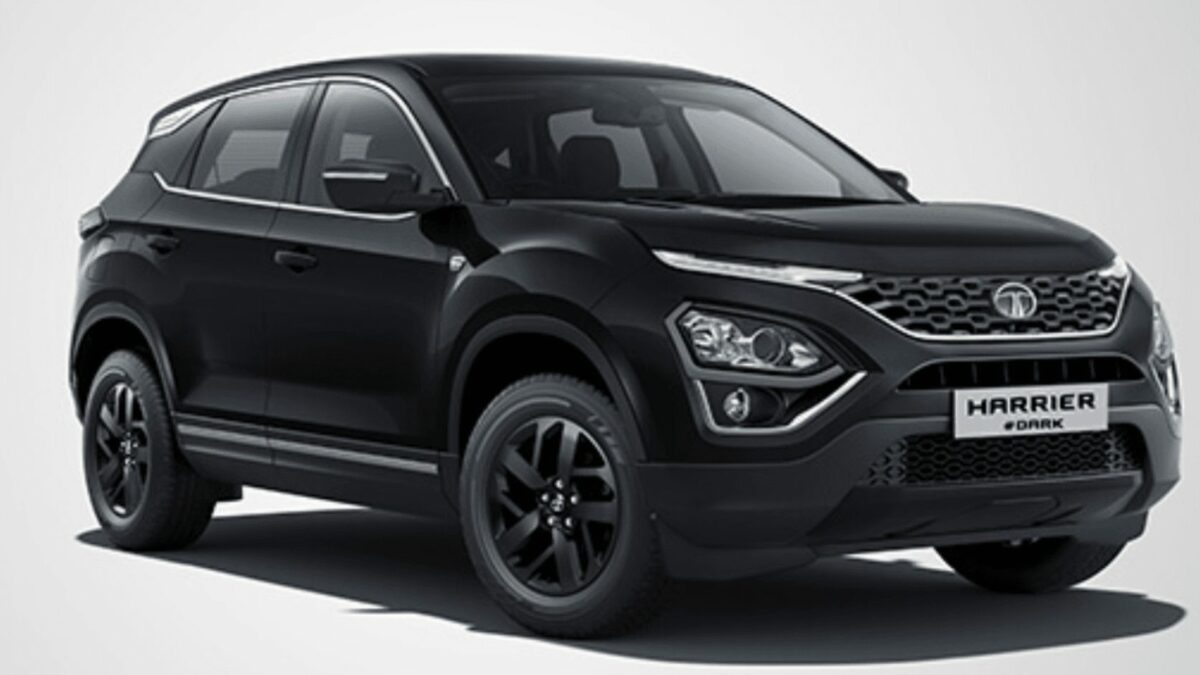
According to the complaint, Palampur resident Dr Krishan Lal Kapoor purchased a Tata Harrier XZA+ Dark Edition in May 2022 for Rs 21,40,775. The SUV was expected to deliver the premium ownership experience associated with one of Tata Motors’ flagship products. However, problems allegedly started within the first 1,000 kilometres. The owner reported prominent knocking sounds and vibrations from the steering system. Following inspection, the dealership reportedly identified issues within the steering assembly and replaced the entire power steering system under warranty. For most buyers, that would have been the end of the story. Unfortunately, it wasn’t.
Timeline of Events
| Event | Details |
|---|---|
| Tata Harrier Purchased | May 2022 |
| Steering Problems Reported | Within 1,000 km |
| Power Steering Replaced | May 2022 |
| First Timing Belt Failure | August 2023 |
| Second Timing Belt Failure | March 2024 |
| Consumer Commission Verdict | June 2025 |
Also read: New-Gen Tata Tiago Launched in ICE, CNG and EV Avatars – All Details!
Two Highway Breakdowns Changed Everything
The dispute escalated dramatically when the SUV allegedly suffered not one but two major timing belt failures. For those unfamiliar, the timing belt is among the most critical components of an internal combustion engine. It synchronizes engine operations and ensures valves and pistons function correctly. Failure of this component can immediately stop the engine.
The first incident reportedly occurred on the Hamirpur-Sujanpur highway in August 2023. According to the complaint, the Harrier suddenly came to a halt, leaving the owner and his family stranded for nearly six hours while awaiting roadside assistance and towing support. The timing belt and associated components were eventually replaced. However, less than a year later, history repeated itself. In March 2024, after covering just 26,711 kilometres, the SUV reportedly suffered another identical timing belt failure near Palampur. The vehicle once again became immobile and required repairs. For a premium SUV costing over Rs 21 lakh, such repeated failures raised serious concerns.
Independent Expert Finds Serious Defect
One of the most crucial aspects of the case was the involvement of an independent automobile expert. Mechanical engineer Gaurav Singh examined the evidence and submitted findings that heavily influenced the commission’s decision. According to the report, timing belts typically last between 90,000 and 1,00,000 kilometres under normal conditions. Experiencing two failures before even reaching 30,000 kilometres was considered highly abnormal.
The investigation reportedly revealed a misaligned timing bracket assembly within the engine system. The expert concluded that this structural defect was responsible for the repeated timing belt failures. Importantly, the commission observed that Tata Motors and the dealership failed to produce equally convincing expert evidence to challenge these findings.
Commission Rejects Tata Motors’ Defence
Tata Motors and the dealership argued that all issues had been attended to under warranty and that the vehicle had already covered more than 30,000 kilometres. The manufacturer maintained that repairs were performed free of cost whenever complaints were reported. The commission, however, was not convinced. It noted that repeated failures of a critical engine component, combined with evidence of structural misalignment, pointed towards an inherent manufacturing defect rather than normal wear and tear.
The bench observed that sudden timing belt failures on highways could expose occupants to serious risks. The commission described the vehicle as “structurally defective and potentially life-threatening.”
Court Orders Replacement or Refund
After examining all the evidence, the commission ruled in favour of the consumer.
Relief Granted to the Owner
| Relief Awarded | Amount |
| Vehicle Replacement | New Defect-Free Harrier |
| Alternative Refund | Rs 21,40,775 |
| Interest on Refund | 9% Per Annum |
| Mental Agony Compensation | Rs 1,00,000 |
| Litigation Costs | Rs 15,000 |
The owner has been directed to return the defective vehicle once he receives either the replacement SUV or the refund amount. This is one of the strongest consumer remedies available under Indian law.
Also read: New Citroen e-C3X vs Tata Punch EV – Which EV To Buy?
What This Means for Indian Car Owners
This verdict serves as a powerful reminder that consumers have rights beyond warranty repairs. Many vehicle owners assume that repeated workshop visits are simply part of ownership. This case demonstrates that when serious defects persist despite multiple repair attempts, courts can intervene. The decision also highlights the importance of maintaining:
- Service records
- Job cards
- Repair invoices
- Complaint emails
- Expert reports
These documents often become decisive evidence in consumer disputes.
Documents Every Car Owner Should Preserve
| Document | Purpose |
| Invoice | Proof of Purchase |
| Warranty Booklet | Coverage Details |
| Job Cards | Repair History |
| Service Bills | Evidence of Recurring Issues |
| Complaint Emails | Communication Trail |
| Expert Reports | Technical Validation |
Editor’s Note
In my years of covering the Indian automotive industry, I have seen countless disputes between consumers and manufacturers. Most are resolved through repairs, goodwill gestures or warranty support. This case stands apart because an independent expert identified a structural defect affecting a critical engine component, and the evidence convinced the commission that continued ownership posed an unreasonable risk.
The verdict should not be viewed as a reflection on every Tata Harrier on Indian roads. Thousands of Harriers continue to serve owners without major issues. The larger lesson is about accountability. Consumers spending over Rs 20 lakh on a premium SUV have every right to expect reliability, safety, and peace of mind. For automakers, the judgment reinforces the importance of proactively addressing recurring defects before they escalate into legal battles. For buyers, the takeaway is equally clear: document everything, preserve every service record and never ignore repeated failures of critical components.
Disclaimer: This post is intended solely for news reporting, educational, informational, and commentary purposes. The information presented is based on reports published by The Indian Express and other publicly available sources. CarBlogIndia and the creator of this post do not independently verify every claim, allegation, observation, legal finding, or statement reported by third-party sources and accept no responsibility or liability for the accuracy, completeness, or outcomes arising from such information. Readers are encouraged to refer to the original source material and official court records, where available, for complete details and context.