

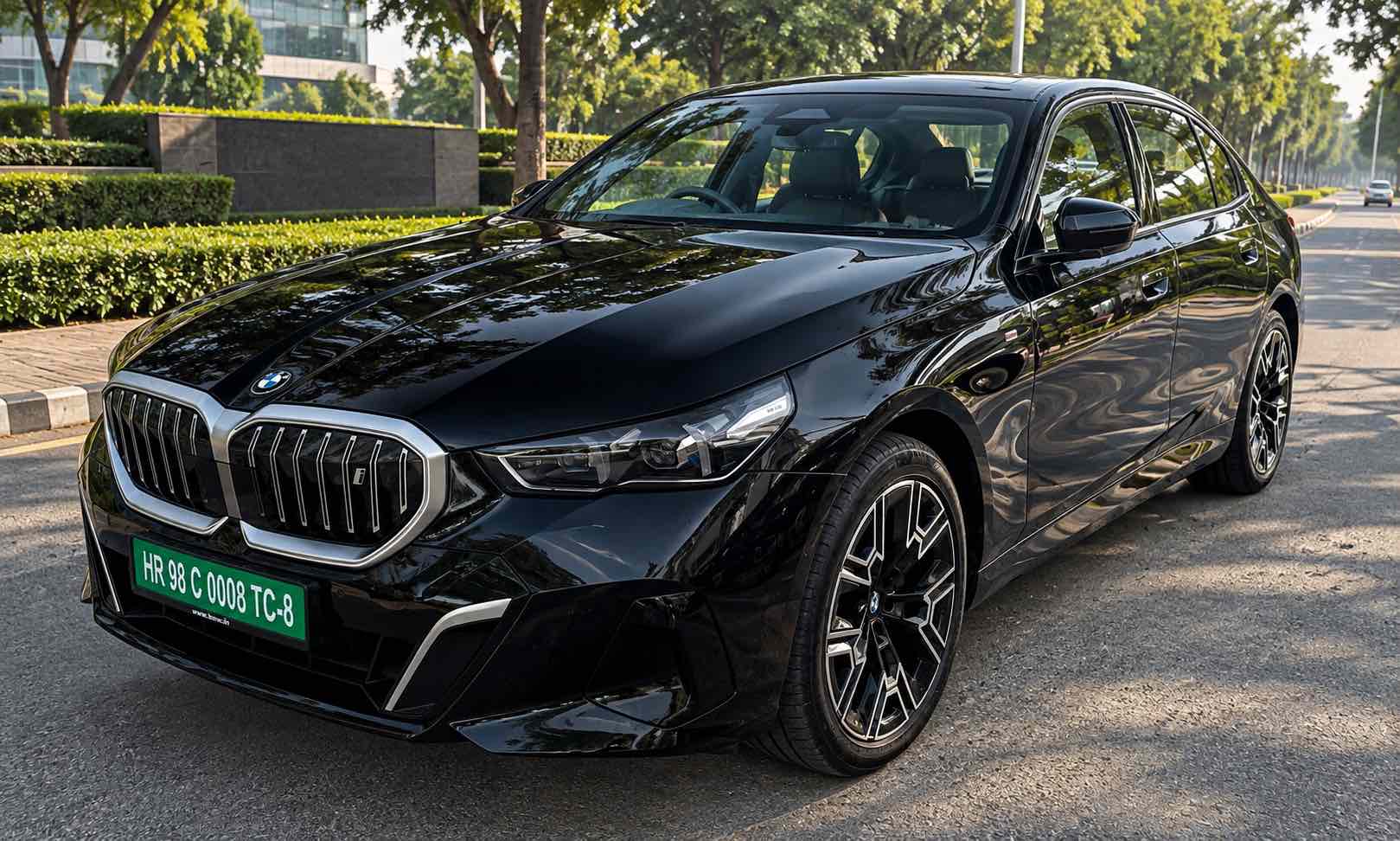
The BMW 5 Series has always occupied an interesting space in the luxury car market. It was never as opulent as a 7 Series, nor as overtly sporty as an M car. Instead, it tried to strike that difficult balance between being a driver’s car and a comfortable executive sedan. The new BMW i5 LWB takes that philosophy in a distinctly different direction.
It is electric, locally assembled and, most importantly for India, stretched. With a 3,105mm wheelbase (+110 mm over standard wheelbase model sold globally) and an overall length of 5,175mm, the i5 LWB is substantially big. It is also longer than its key rival, the Mercedes-Benz E-Class. BMW has increased ground clearance by 18mm compared to the global standard-wheelbase car as well.
Priced at ₹79.60 lakh (ex-showroom) , the i5 eDrive35L sits just ₹3 lakh above the petrol-powered 530Li. That makes this a rather interesting proposition because BMW isn’t simply offering an electric 5 Series. It is offering an electric 5 Series specifically configured around the requirements of the Indian luxury-car buyer. And that distinction matters.
Spot the Difference
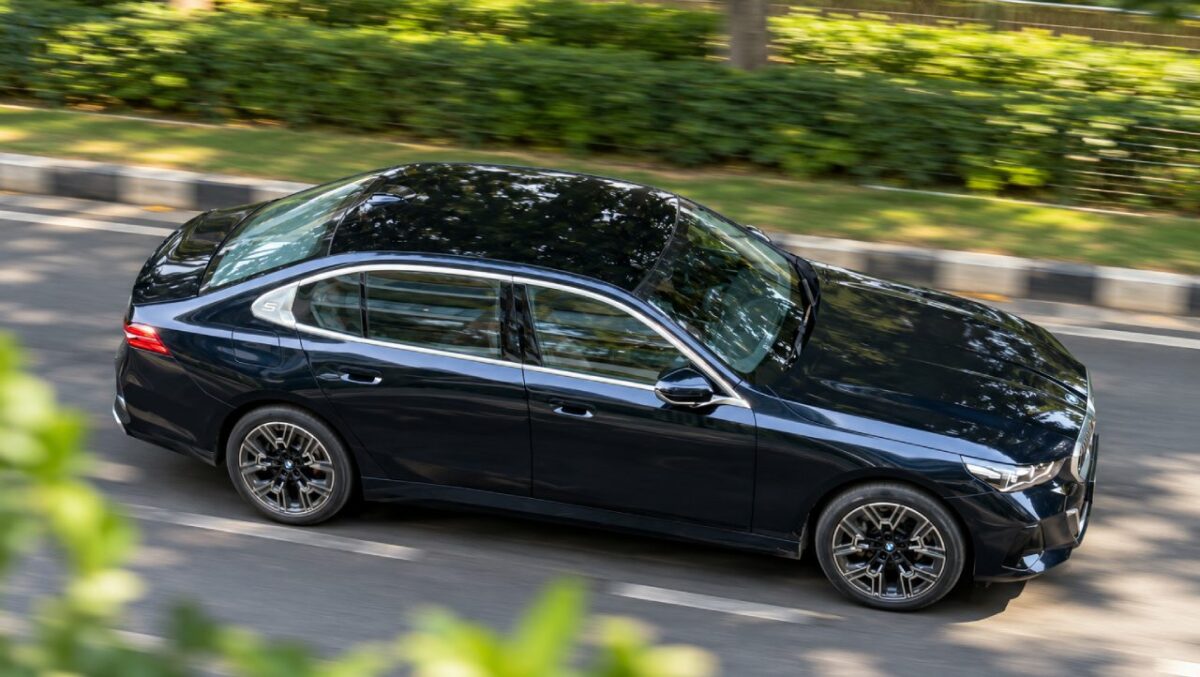
The latest 5 Series has never been a conventionally styled BMW. There is a lot going on here. The surfacing is intricate, the detailing is elaborate and the overall design can look rather busy from certain angles. The i5 doesn’t radically alter that formula. In fact, BMW has deliberately kept the electric version visually close to the 530Li. The closed-off kidney grille, i badge and green number plate are the obvious giveaways. Everything else, including the sculpted bonnet, slim LED headlamps and flush door handles, carries over the broad design theme of the petrol car.
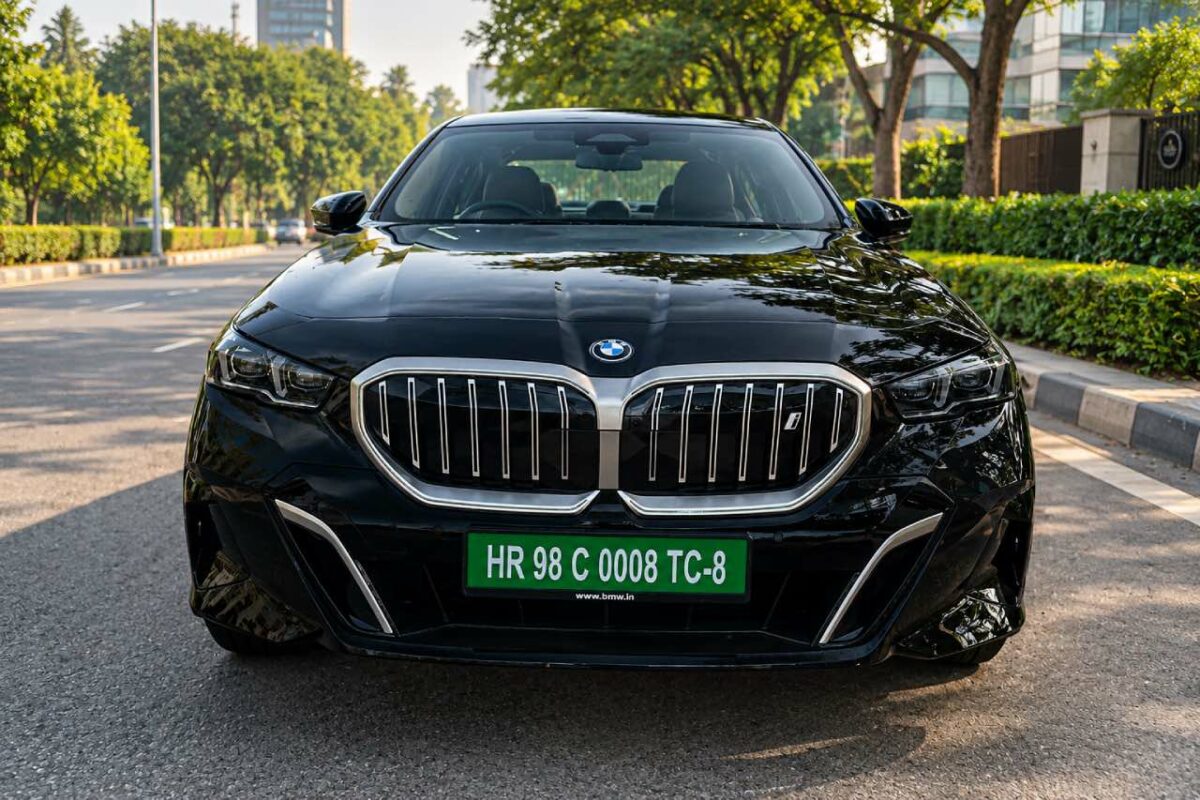
The large 20-inch M alloy wheels do help the proportions considerably. They fill the wheel arches much better than the smaller wheels initially offered on the 530Li. At over 5.1 metres long, the i5 LWB is a properly imposing sedan. It has the road presence expected from a BMW in this price bracket, but it doesn’t scream “electric car”. And I think that is the right approach. A buyer spending nearly ₹80 lakh on a luxury sedan doesn’t necessarily want to announce that they’ve bought an EV. They want a premium BMW that happens to be electric.
Also read: BMW X3 30 xDrive M Sport Pro Test Drive Review – Class Dismissed
Properly Premium
Step inside and the i5 immediately feels like a modern BMW. The dashboard is dominated by the familiar curved-screen arrangement, while open-pore wood, silver accents, ambient lighting and BMW’s crystalline detailing add plenty of visual drama. The crystal-finished drive selector, iDrive controller and volume dial are particularly nice touches. The cabin feels even more special in night-time, as the ambient light package, together with the LED signatures on the fixed glass roof, enhances the overall ambiance.
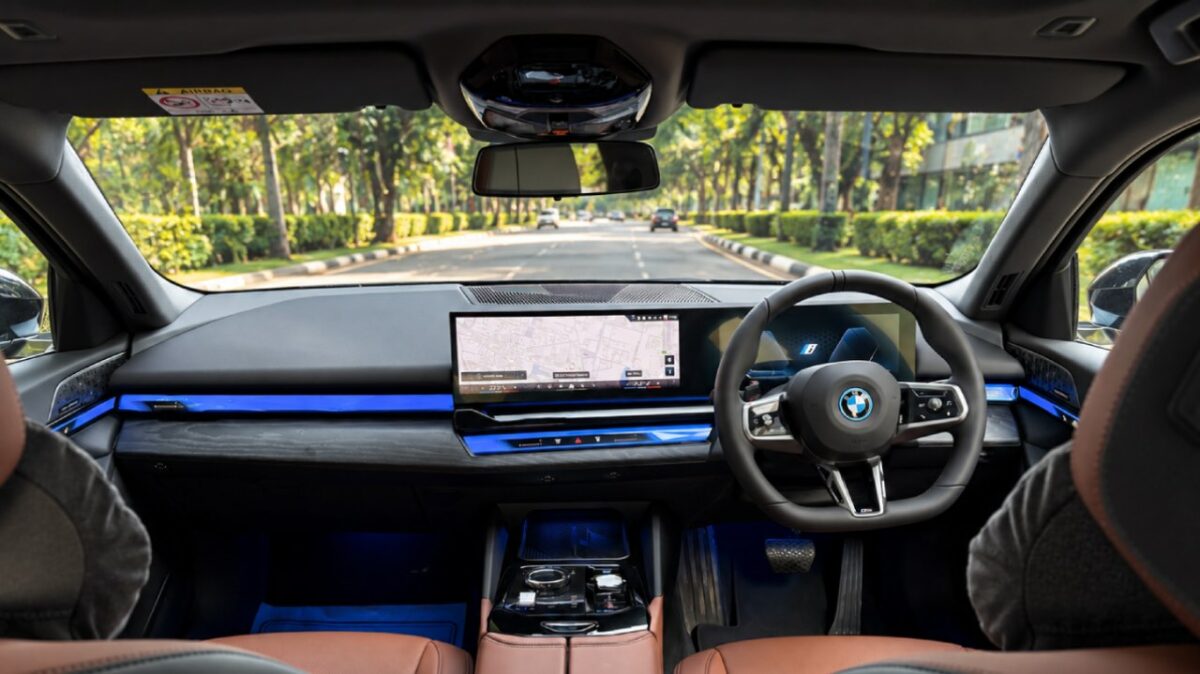
The front seats are excellent. They are supportive, well-shaped and ventilated, although BMW has dropped the manually extendable thigh support that older 5 Series models offered. The rear seat, however, is where the i5 LWB really earns its badge. The additional wheelbase translates into generous knee room and creates the sort of lounge-like space that Indian luxury-car buyers increasingly expect. The rear bench is comfortable and well contoured, making the i5 particularly well suited to two passengers travelling in chauffeur-driven comfort.
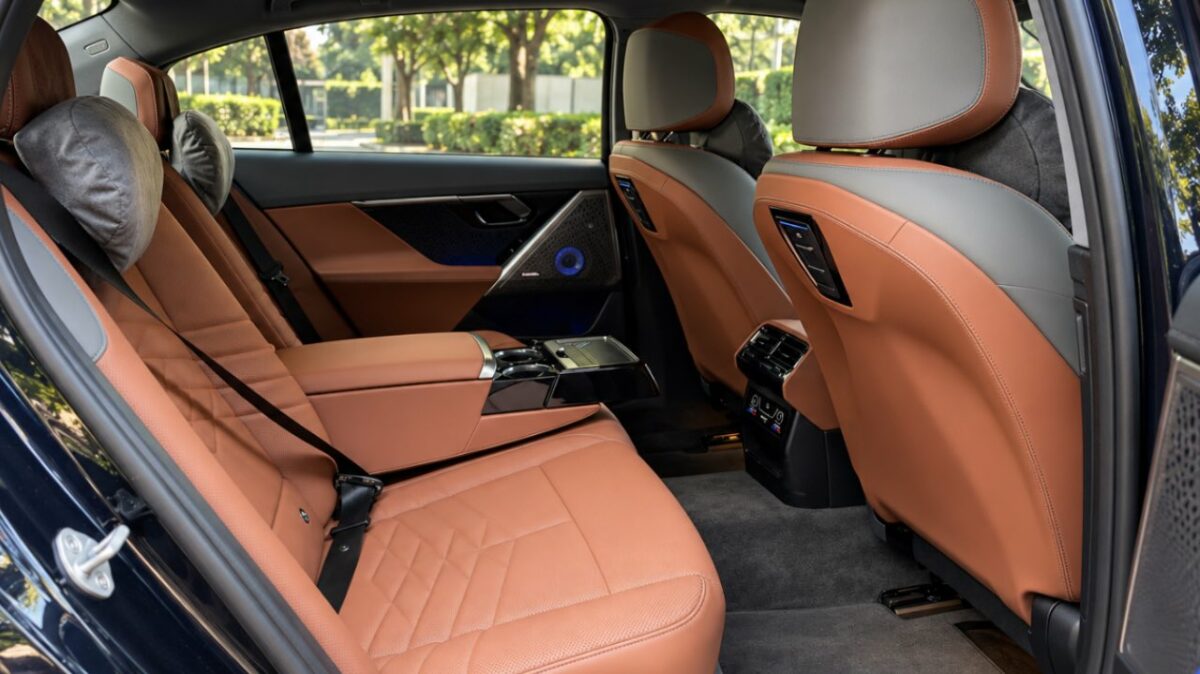
There are, however, some curious omissions. The rear seats don’t recline. There are no rear sunblinds, no massage or ventilation functions and the middle passenger has to deal with a raised floor/tunnel and a firmer backrest. Interestingly, I had a similar experience in the back seat of the ICE 5-Series, and in this price segment, these are seriously noticeable omissions, especially in a vehicle that highly priortises rear-seat travel experience. To sum it up, the i5 LWB is spacious and comfortable, but BMW hasn’t gone all the way towards creating the indulgent rear-seat experience associated with some chauffeur-focused luxury cars. The i5’s boot is rated around 500 litres, broadly similar to the petrol 5 Series. But there’s an important catch here – The spare wheel sits on the boot floor rather than underneath it. This eats into the usable luggage space and makes stacking multiple bags more difficult.
Tech Overload
The BMW i5 gets the brand’s familiar 12.3-inch digital instrument cluster and 14.9-inch touchscreen setup. The displays look fantastic and respond quickly. Wireless Apple CarPlay and Android Auto are standard, while the car also gets features such as a 360-degree camera, four-zone climate control, wireless charging pads for both front and rear passengers and a panoramic glass roof with integrated ambient lighting.
The 17-speaker, 655-watt Bowers & Wilkins audio system is another highlight. It sounds superb and is exactly the sort of feature that makes sense in a luxury sedan. You can simply sink into the rear seat, close the doors and enjoy the silence and audio quality that an EV brings to the equation. The only downside is that BMW has pushed a lot of functions into the touchscreen. Climate control and certain drive-related functions require navigating through menus, which isn’t always as intuitive as having dedicated physical controls.
Also read: New BMW 7 Series and i7 Launched in India – All You Need To Know!
The Electric Experience
The i5 eDrive35L uses a single rear-mounted electric motor producing 272hp and 410Nm. On paper, those figures are remarkably close to the 530Li’s outputs. But the way the i5 delivers that performance is completely different. In a fashion typical of electric cars, there’s no waiting for the revs to build or for the gearbox to hit the right ratio. Just push the pedal to the metal and the car surges ahead with an almost verocious pace with no lag.
BMW claims 0-100km/h in 6.7 seconds. Independent testing has shown that the figure is achievable at around 7 seconds. While the petrol-sipping 530Li is actually marginally quicker, that isn’t really the point. The i5 feels effortlessly quick in everyday driving. The instant torque makes overtaking and gap-shooting extremely easy, while the power delivery is smooth and predictable. It isn’t neck-snapping by modern EV standards, but there is more than enough performance for Indian roads. And that brings us to perhaps the biggest change.
The i5 gets an 81.6kWh battery, with BMW claiming an impressive 669km MIDC range. As always, the test bed figure needs to be treated as exactly that: a test figure. Real-world range will be considerably lower and depends heavily on driving style, road conditions and drive mode. Our estimates show a realistic range of around 400 km, without driving like one’s life depends on extracting the max. range. The i5 supports DC fast charging up to 160kW, with BMW quoting roughly 33 minutes for a 10-80 percent charge. An 11kW AC wallbox is also included.
The i5 LWB retains rear-wheel drive and 50:50 weight distribution. The low-mounted battery also keeps the centre of gravity low, and the car feels composed through corners. The steering is precise and gains more heft in Sport mode. But the old-school 5 Series sharpness has been dialled back. The softer suspension, increased ground clearance and the XL wheelbase, along with the focus on rear-seat comfort, has taken away some of the edgy, driver-focused character that made older 5 Series generations special. And yet, I don’t think BMW has got the brief wrong. BMW isn’t trying to make the i5 LWB an electric M5. Instead, it is trying to make an electric executive sedan that works beautifully in the real world. For that job, the softer character makes sense.
The ride is perhaps the i5 LWB’s biggest strength. The car gets rear air suspension, something the 530Li doesn’t have, and the difference is immediately apparent. Low-speed ride quality is exceptionally plush, while potholes and broken urban surfaces are dealt with remarkably well. Then there is the increased ground clearance. BMW has raised it by 18mm compared to the standard-wheelbase international version, and that makes a meaningful difference on Indian roads. Speed breakers are no longer something you have to approach with the nervousness associated with a low-slung luxury sedan. Even with four occupants aboard, the i5 LWB deals with most urban obstacles without much drama, though one needs to be a tad careful on those sharp speedhumps. Still, for a five-metre-plus luxury sedan, that’s a big deal. This is also where the LWB strategy starts making even more sense. The car isn’t merely longer for the sake of giving rear passengers more legroom. It has been adapted to the realities of Indian roads and Indian luxury-car usage. That is smart localisation.
So, Has The 5 Series Lost Its Soul?
In a small way, yes. But I don’t think that’s necessarily a bad thing. If your definition of the 5 Series is an engaging driver’s car with sharp responses, strong steering feel and a chassis that encourages you to find a winding road, the i5 LWB isn’t going to deliver the same experience as older generations of 5-Series. That BMW has consciously softened it was evident right at the advent of the latest-gen ICE version.
But if your definition of a modern luxury 5 Series is a spacious, refined, comfortable sedan that can effortlessly cover long distances, glide through city traffic and keep rear passengers happy, the i5 LWB makes considerably more sense. And this is where BMW India’s LWB strategy deserves attention.
The company has clearly recognised that the Indian luxury-car market is not driven solely by enthusiasts. The major chunk of audence, in fact, values rear-seat space, comfort, road presence, easy performance and a sense of occasion more than outright driver involvement. The i5 LWB is almost a textbook example of that philosophy. It takes the 5 Series, stretches it, raises it, gives it a more comfort-oriented suspension setup and then replaces the combustion engine with a quiet electric powertrain. The result is less of a driver’s 5 Series and more of an executive’s 5 Series, which is what the Indian market demands.
Also read: New BMW X1 LWB Driven! Is Bigger Really Better?
Verdict: A Different Kind Of 5
Let’s get this out of the way. The i5 LWB is not the sort of BMW that will immediately have enthusiasts reaching for their driving gloves. And THAT isn’t necessarily a criticism. BMW has understood something rather important about the Indian luxury-car market. A large proportion of buyers in this segment don’t experience their luxury sedan exclusively from behind the steering wheel. They experience it from the rear seat, often with a chauffeur behind the wheel. This is where BMW’s Long Wheelbase strategy makes a lot of sense.
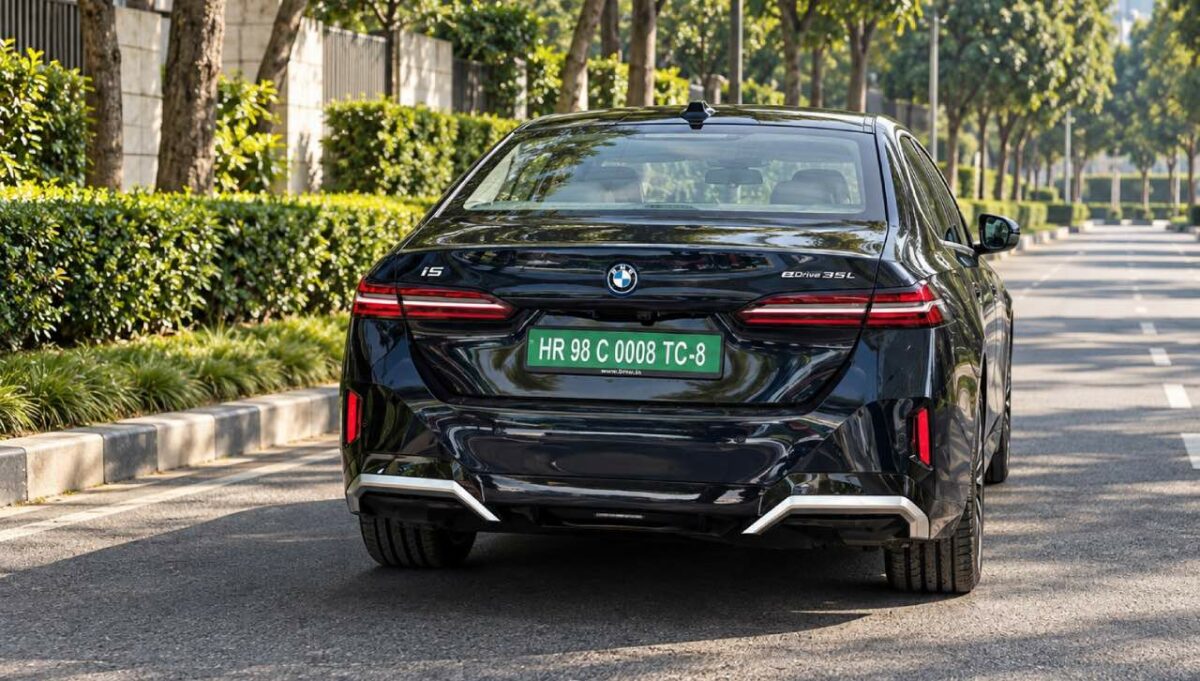
It isn’t the fastest electric luxury sedan but what it does exceptionally well is deliver what the majority of luxury-car buyers in India increasingly want: space, comfort, refinement, effortless performance and plenty of road presence. At ₹79.60 lakh, it commands a relatively modest ₹3 lakh premium over the 530Li while offering the advantages of electric propulsion, rear air suspension, an exceptionally quiet cabin and 40% depreciation rate for EVs under Income Tax act.
There are shortcomings. The rear-seat feature list isn’t as indulgent as it should be at this price, the middle passenger isn’t particularly comfortable and the spare wheel’s placement compromises luggage usability. But the fundamentals are strong. The i5 LWB feels like BMW has listened carefully to the Indian luxury-car market. It isn’t trying too hard to prove that an electric BMW can be sporty. Instead, it focuses on being a very good luxury car first. And that, in my view, is exactly what BMW India needed from this car. The BMW purists will surely miss the old 5 Series magic, but a typical luxury electric car buyer, however, will appreciate what BMW has gained.